Private Jet Luxury Examples: A 2026 Guide to Elite Aviation
In the contemporary landscape of high-stakes global mobility, the concept of luxury has undergone a profound shift. It has migrated from the conspicuous display of rare materials to the invisible architecture of time management and physiological preservation. A private jet is no longer merely a vehicle; it is a pressurized sanctuary where the environment is engineered to mitigate the systemic stresses of transcontinental travel. This evolution reflects a broader trend in the 2026 aviation sector, where the “ultra-luxury” segment is increasingly defined by how a traveler feels after a fourteen-hour flight, rather than the initial visual impact of the cabin.
As aircraft range has extended to nearly 8,000 nautical miles, the technical demands of the interior have grown exponentially. We are seeing the rise of “well-being-centric” design, where plasma ionization systems and circadian lighting arrays are integrated into the airframe to combat the biological toll of jet lag. Consequently, the discourse surrounding elite travel has moved past the singular focus on leather and lace, entering a more nuanced territory of data-driven comfort and hyper-personalized service logistics.
To understand the current state of this industry, one must look beyond the glossy marketing brochures and into the specific, layered executions of bespoke aviation. The true hallmark of modern private jet luxury is the seamless integration of high-performance engineering with the subtle, often unnoticeable details that preserve the passenger’s cognitive and physical health. This article serves as a definitive exploration of those examples, providing a framework for understanding how the highest echelon of travelers interacts with the sky.
Understanding “private jet luxury examples”
The phrase private jet luxury examples frequently evokes images of gold-plated faucets and exotic hardwood veneers, yet this perspective is increasingly viewed as an oversimplification by industry veterans. In 2026, luxury is better understood as a triad of Access, Environment, and Personalization. The multi-perspective view of a luxury flight involves the principal’s need for privacy, the crew’s requirement for ergonomic efficiency, and the engineer’s goal of weight-neutral opulence. When these three goals conflict, the luxury experience often breaks down.
One of the most common misunderstandings is that “luxury” is synonymous with “large.” While a Boeing Business Jet (BBJ) or an Airbus Corporate Jet (ACJ) offers the square footage of a penthouse, a mid-size jet like the Embraer Phenom 300E can be considered more luxurious for a specific mission if it provides access to a short-runway airport that puts the passenger 10 minutes from their final destination, rather than an hour-long drive from a major international hub. Thus, luxury is context-dependent; it is the absence of friction in the traveler’s schedule.
There is also a risk of oversimplification regarding the “bespoke” nature of cabin interiors. True customization involves more than selecting a color palette; it involves structural modifications to the airframe to accommodate specific lifestyles. Examples include the installation of specialized medical suites for aging principals, the integration of 55-inch 4K “theaters” that require complex vibration damping, or the inclusion of “Artist Walls” where the bulkhead itself is a certified piece of three-dimensional art. These are the markers of authentic mastery in the field.
Contextual Background: The Evolution of the Flying Palace
The trajectory of private aviation has moved through three distinct eras. The Utilitarian Era (pre-1970s) saw aircraft as purely functional business tools with interiors that mirrored commercial first class. The Opulence Era (1980s–2010s) was characterized by the “more is more” philosophy—heavy woods, thick carpets, and visible wealth. We are currently in the Integrative Era, where luxury is buried in the software and the air quality.
The 2026 landscape is defined by the ultra-long-range “heavy” jets: the Bombardier Global 8000 and the Gulfstream G800. These aircraft are capable of Mach 0.94 speeds and 8,000nm ranges. This technical leap has forced designers to rethink the cabin as a living space rather than a seat. Historical barriers, such as the loud “white noise” of the engines and the dry, recycled air of the cabin, have been systematically dismantled. The result is a jet that maintains a cabin altitude of just 2,900 feet while flying at 41,000 feet, allowing the human body to absorb more oxygen and arrive feeling physically refreshed.
Conceptual Frameworks: The Three Pillars of Modern Luxury
1. The Physiological Preservation Model
This framework focuses on the biological impact of flight. Luxury is measured by the quality of the air (HEPA filtered and plasma ionized), the humidity levels (mitigating the standard 5% desert-like dryness of cabins), and the “Smooth Ride” technology that uses active wing-flexing to neutralize turbulence before the passengers feel it.
2. The Digital/Physical Workspace Hybrid
In this model, the aircraft is a secure, high-speed node in a global network. Luxury is the ability to conduct a multi-party, encrypted video conference via Starlink at 45,000 feet with the same latency as a ground-based office. The “luxury” here is the continuity of power and productivity.
3. The “Silent Service” Architecture
This mental model prioritizes the invisibility of the crew and the mechanics. It involves specialized “galley-forward” layouts that allow flight attendants to prepare Michelin-star meals without the smell or sound of the kitchen reaching the main lounge. It is the luxury of undisturbed solitude.
Key Categories of Luxury Execution
| Category | Typical Execution | Key Benefit | Example Aircraft |
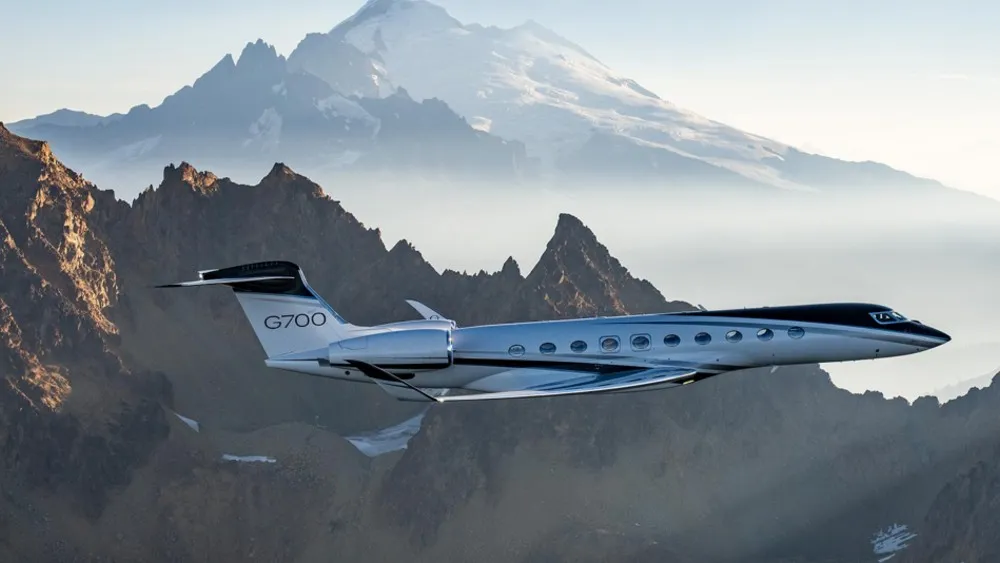
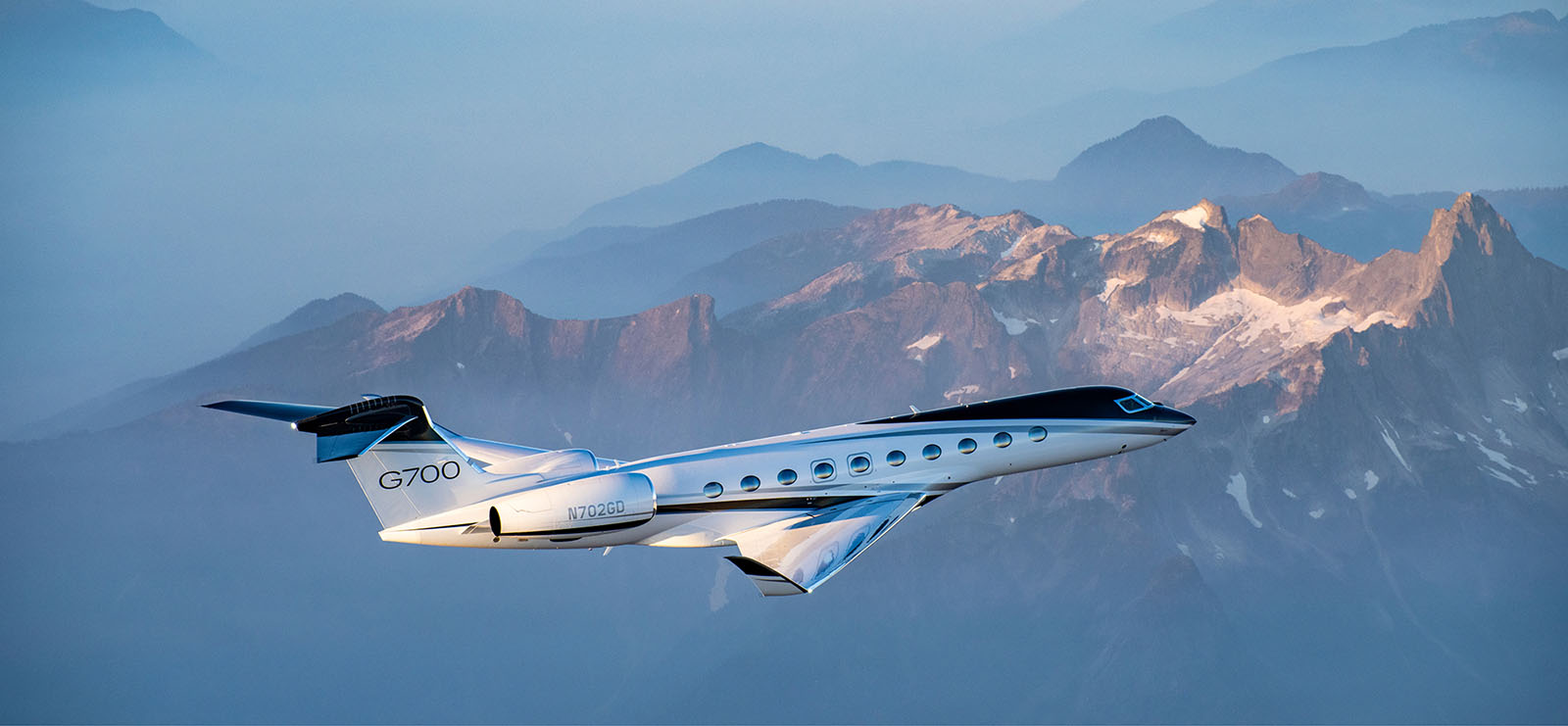
| Well-Being | Circadian lighting, 100% fresh air | Reduces jet lag | Gulfstream G700 |
| Bespoke Art | 3D-slatted screens, Artist Walls | Emotional elevation | Bombardier Global 7500 |
| Dining | Full-size convection ovens, chilled storage | Culinary excellence | Embraer Lineage 1000E |
| Rest | Master suites with stand-up showers | Physiological recovery | ACJ TwoTwenty |
| Productivity | Soundproofed “Snugs,” 5G Wi-Fi | Business continuity | Dassault Falcon 10X |
| Entertainment | 55″ 4K TV, 360-degree audio | Immersive experience | Bombardier Global 8000 |
Decision Logic: Material vs. Performance
An owner must often choose between the “weight” of luxury materials (like marble or solid gold) and the “range” of the aircraft.
-
The Decision: High-tech “foil imitations” or ultra-thin stone veneers.
-
The Logic: If the marble is too heavy, the jet may need a fuel stop in Anchorage on the way to Tokyo. Real luxury in 2026 is flying non-stop; therefore, lightweight technology always trumps traditional heavy materials.
Detailed Real-World Scenarios and Operational Logic
Scenario 1: The “Zero-Gravity” Transatlantic Rest
A principal flies from London to New York on a Bombardier Global 7500.
-
The Feature: The “Nuage” seat, which features a floating base and a zero-gravity tilt.
-
The Logic: By aligning the heart and knees, the seat improves circulation during the 7-hour flight.
-
Outcome: The traveler avoids the “heavy leg” syndrome associated with traditional seating, entering their board meeting with full cognitive clarity.
Scenario 2: The “Silent Suite” Diplomacy
A head of state uses a BBJ 787-8 for a summit in Singapore.
-
The Feature: Zoned soundproofing and “Electrochromic” windows that dim at the touch of a button.
-
The Logic: Creating a “Cone of Silence” for sensitive discussions while the staff operates in a separate lounge.
-
Outcome: Privacy is maintained without the need for physical barriers that would make the cabin feel claustrophobic.
Scenario 3: The Michelin-at-Altitude Dinner
A family office charters a jet for a holiday in the Maldives.
-
The Feature: A dedicated Onboard Executive Chef using local ingredients.
-
The Constraint: Food tastes 30% less “intense” at altitude due to low humidity.
-
The Logic: The chef adjusts the seasoning profile specifically for the pressurized environment.
Planning, Cost, and Resource Dynamics
The “luxury” of a private jet is the tip of a very expensive iceberg. The financial architecture required to maintain these private jet luxury examples is staggering.
| Expense Category | Annual/Per-Trip Cost | Value Driver |
| Interior Completion | $20M – $100M+ | Tailored brand/lifestyle identity |
| Cabin Crew Training | $15,000 – $30,000/yr | Intuitive “Silent Service” quality |
| Satellite Connectivity | $5,000 – $20,000/mo | Global business/entertainment uptime |
| Soft Goods (Linens/Silk) | $50,000+/yr | Tactile comfort and hygiene |
The Opportunity Cost of “Stock” Interiors:
When an owner chooses a “designer” interior over a manufacturer’s standard package, they add 12–18 months to the delivery timeline. The luxury here is the patience to wait for a unique asset, rather than accepting a commoditized solution.
Tools, Strategies, and Support Systems
-
Soleil Lighting System: The first circadian rhythm-based lighting fully integrated into the Flight Management System. It simulates the destination’s daylight before you arrive.
-
L’Opéra Audio: Specialized speaker placement that accounts for the unique acoustics of a carbon-fiber fuselage.
-
Starlink Aviation: Low-earth orbit satellite clusters providing sub-100ms latency internet.
-
Cabin Management Systems (CMS): Intuitive apps allowing passengers to control everything from the “cocktail button” to the window shades from their phone.
-
Bespoke Luggage Lines: Custom trunks designed to fit the exact geometry of the jet’s baggage hold, maximizing every cubic inch.
-
Medical Concierge Integration: On-board physicians for ultra-wealthy families or elderly principals on long-haul missions.
-
Scent Branding: Custom-engineered cabin scents that are dispersed through the environmental control system to create a familiar “home” atmosphere.
-
Pet-Centric Amenities: Dedicated “pet suites” with bespoke harnesses and temperature-controlled floor mats for K9 passengers.
Risk Landscape: The Fragility of Perfection
Luxury creates a high baseline of expectation, which makes the “failure modes” more dramatic.
-
Technology Overload: If the CMS (Cabin Management System) crashes, the passenger may not even be able to turn on the reading light or flush the toilet. This is the “Digital Fragility” of luxury.
-
Logistical Cascades: A missing bottle of a specific 1982 vintage wine can be perceived as a systemic service failure by an UHNW (Ultra-High-Net-Worth) client, regardless of the jet’s performance.
-
Maintenance of Bespoke Materials: A red wine stain on a $200,000 hand-woven silk carpet isn’t just a cleaning issue; it can ground the aircraft for days if the material is non-compliant with FAA fire-safety standards after a third-party cleaning.
Governance, Maintenance, and Long-Term Adaptation
The “Luxury” of the jet must be managed like a high-end estate.
-
Review Cycles: Every 6 months, the “Soft Goods” (towels, linens, glassware) should be audited for wear. Luxury is the absence of “visible use.”
-
Adjustment Triggers: If a principal begins using a new type of device (e.g., Apple Vision Pro), the aircraft’s Wi-Fi and power infrastructure must be upgraded within 30 days to accommodate the new bandwidth requirements.
-
The “Luxury Checklist”:
-
Verify HEPA filter replacement (Leading indicator of air quality).
-
Calibrate lighting color temperature.
-
Test “Smart Wine” storage temperature stability.
-
Audit crew training on “Discrete Presence” protocols.
-
Measurement and Evaluation of the “Luxury Experience”
How do you quantify something as subjective as luxury?
-
Qualitative Signal: “Post-Flight Fatigue Score.” Passengers are asked to rate their energy levels on a scale of 1-10 upon landing.
-
Quantitative Signal: “Mean Time to Connect.” How many seconds does it take for the Wi-Fi to be operational after reaching 10,000 feet?
-
Leading Indicator: “Cabin Altitude Margin.” Keeping the cabin at the lowest possible altitude is the single best predictor of passenger satisfaction on long-haul flights.
Common Misconceptions and Oversimplifications
-
Myth: “The most expensive jet is the most luxurious.”
-
Correction: A $75M Gulfstream G700 is less luxurious than a $10M Citation if the Gulfstream is too large to land at the island strip where the owner’s villa is located.
-
-
Myth: “Gold fixtures are the peak of design.”
-
Correction: In 2026, gold is considered “legacy luxury.” Modern luxury is “stealth”—textured carbon fiber, recycled ocean plastics, and matte finishes.
-
-
Myth: “You can just hire any chef.”
-
Correction: High-altitude cooking is a specialized skill. Without training on how pressure affects flavor and moisture, a five-star chef will produce a three-star meal in the air.
-
-
Myth: “Private jets are just for show.”
-
Correction: For global executives, the “luxury” is the security of a private conversation that can’t be eavesdropped on in a commercial cabin.
-
Conclusion: The Future of Discrete Mobility
The world of private jet luxury examples has moved far beyond the superficial. It is now a highly disciplined marriage of aerospace engineering and human-centric design. As we look toward the next decade, the focus will likely shift even further toward sustainability—luxury as the “guilt-free” flight, powered by hydrogen or electric propulsion.
True luxury remains, as it always has been, the ability to control one’s environment. In the sky, that control is achieved through the meticulous management of light, sound, air, and time. For the individual who occupies these spaces, the jet is not a status symbol, but a biological and professional force multiplier. It is the ultimate synthesis of human ingenuity and the timeless desire for a sanctuary in the clouds.