Best Private Jet for Group Travel: The Definitive 2026 Guide
The logistics of high-capacity private aviation are governed by a complex set of variables that extend far beyond the simple seat count of an airframe. Best Private Jet for Group Travel. When coordinating travel for a large party—whether a corporate board, a multi-generational family, or a high-performance sports team—the definition of a “successful flight” shifts from mere luxury to operational synchronization. In this tier of aviation, the aircraft must function as a mobile environment that facilitates specific interpersonal dynamics while simultaneously adhering to the rigid physical constraints of weight, balance, and runway performance.
For the modern principal or flight department, selecting the appropriate vessel for a group requires a forensic understanding of how volume impacts range. It is a common misconception that a jet’s maximum passenger capacity is a constant; in reality, every additional traveler and their associated luggage subtracts from the aircraft’s fuel-carrying capacity. Consequently, a mission that is technically possible with four passengers may become operationally unfeasible with twelve, necessitating a larger airframe or a strategic fuel stop.
As we progress through 2026, the industry is witnessing a “Bifurcation of Space.” The most advanced group-travel solutions are moving away from rows of identical seating toward “zonal architecture.” These zones allow for simultaneous and conflicting activities: a quiet conference at the front of the cabin, a full meal service in the center, and restorative rest in the aft. This article serves as the definitive reference for navigating these choices, providing the intellectual depth necessary to determine the most effective airframe for high-capacity missions.
Understanding “best private jet for group travel”
To identify the best private jet for group travel, one must first decouple “seating capacity” from “mission utility.” A multi-perspective explanation of this sector reveals that a “top-tier” experience for a group is defined by the quality of the shared environment. From a technical perspective, it is about the “Payload-Range Curve”—how far the jet can fly when every seat is filled. From a human perspective, it is about “Proxemics,” the study of how people use space in confined environments to maintain comfort and social hierarchy.
A frequent misunderstanding in group travel is the “Luggage Paradox.” While a jet might be certified to carry 14 passengers, its baggage compartment may only accommodate the luggage of eight, particularly if the group is traveling for a ski retreat or an extended international tour. Oversimplification here often leads to “Tarmac Friction,” where passengers must be told that their excess bags cannot be loaded due to center-of-gravity (CG) limits. The best airframe for a group is the one where the baggage-to-passenger ratio is perfectly aligned with the mission’s duration and destination.
Furthermore, “Luxury” for a group is measured in decibels and humidity. In a crowded cabin, carbon dioxide levels rise faster, and noise from multiple conversations can become fatiguing. The premier options in 2026 incorporate advanced environmental control systems (ECS) that replace the cabin air every two minutes and maintain a low “cabin altitude,” ensuring that the group arrives at their destination with high cognitive function and minimal physiological stress.
The Systemic Evolution of High-Capacity Cabins
Historically, group travel was the domain of “Converted Airliners” or “Bizliners,” such as the Boeing Business Jet (BBJ) or the Airbus Corporate Jet (ACJ). These aircraft offered massive volume but were limited by their need for large-scale commercial airport infrastructure. In the 1990s and 2000s, the “purpose-built” large-cabin jet—led by the Gulfstream V and the Bombardier Global Express—shifted the market. These jets could access smaller, more convenient airports while still offering enough space for 12 to 16 passengers.
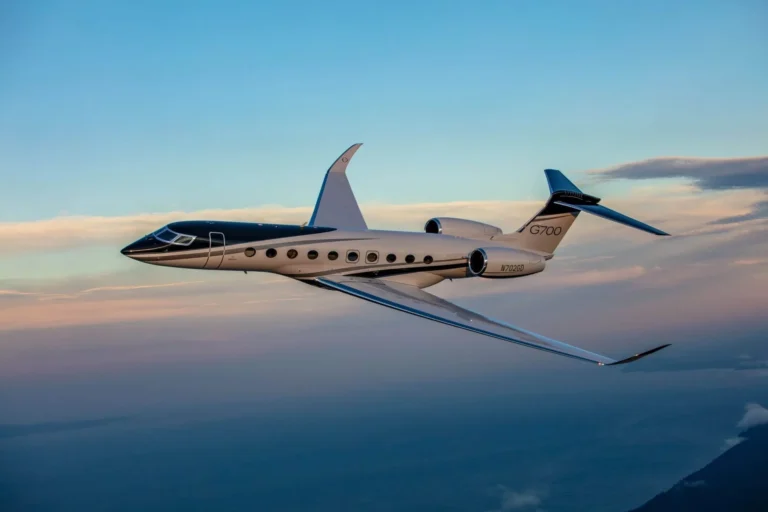
The modern era is defined by the “Ultra-Long-Range” (ULR) revolution. Today’s flagship airframes, like the Gulfstream G700 and the Bombardier Global 7500, have introduced four-zone cabins. This systemic change allows for a level of operational flexibility previously reserved for heads of state. We are also seeing the rise of “Regional High-Capacity” jets, like the Embraer Lineage 1000E, which prioritizes cabin volume over intercontinental range, providing a “living room” experience for shorter, high-volume domestic hops.
Conceptual Frameworks for Group Mission Analysis
Professional planners utilize specific mental models to evaluate the efficacy of a group flight.
1. The “Zonal Integrity” Framework
This model evaluates an aircraft based on its ability to physically separate conflicting activities. A “top” group jet must have at least three distinct zones. If a corporate team is preparing for a pitch while the principal is attempting to sleep, the physical bulkhead and acoustic insulation between those zones become the primary luxury metric.
2. The “Payload-to-Fuel” Equilibrium
In group travel, every 200 lbs of passenger and baggage weight typically displaces an equivalent weight in fuel. This framework calculates the “Range Penalty” of a full cabin. For example, a jet with a 6,000 nm range with four passengers might only have a 5,200 nm range with 14 passengers. Mastering this equilibrium is vital for avoiding unscheduled technical stops.
3. The “Biological Load” Index
This index measures the impact of cabin density on human performance. It accounts for the oxygen-to-passenger ratio and the “quiet zone” decibel levels. In a full cabin, the “Biological Load” is higher; therefore, the choice of aircraft must prioritize air filtration (HEPA) and low cabin altitudes to mitigate the compounding effects of crowding.
Key Airframe Categories and Capacity Trade-offs
Selecting the right jet involves balancing the number of travelers against the required performance.
| Category | Typical Group Size | Leading Examples | Primary Trade-off |
| Super-Midsize | 8 – 10 | Challenger 3500, Citation Longitude | Limited baggage space for long trips |
| Large Cabin | 10 – 14 | Falcon 2000LXS, Gulfstream G450 | Higher operating cost per hour |
| Ultra-Long Range | 14 – 19 | Global 7500, Gulfstream G700 | Massive footprint; may not fit in small hangars |
| Bizliners | 19 – 50 | BBJ 737-MAX, ACJ TwoTwenty | Limited to airports with commercial runways |
| Executive Shuttles | 16 – 30 | Embraer ERJ 145 (Converted) | “Airliner” feel; less bespoke luxury |
Realistic Decision Logic
The “Volume vs. Velocity” trade-off is the central decision point. If a group of 12 is flying from New York to London, a ULR jet is non-negotiable for a non-stop, high-comfort arrival. However, if that same group is flying from Chicago to Aspen, an Embraer Lineage 1000E—which offers the largest cabin in its class—provides more “living space” for the two-hour flight, even though it lacks the transcontinental speed of a Gulfstream.
Real-World Scenarios: From Corporate Boards to Family Offices Best Private Jet for Group Travel
Scenario 1: The Multi-Generational Holiday
A family of 14, including small children and elderly members, is flying from Miami to St. Moritz.
-
The Constraint: Massive amounts of winter luggage and the need for a “bedroom” environment for the seniors.
-
The Solution: A Bombardier Global 7500. Its dedicated master suite provides a sanctuary for the elderly, while the club seating area accommodates the rest of the family.
-
Failure Mode: Choosing a jet with only three zones, forcing the children and the seniors into the same acoustic space for 9 hours.
Scenario 2: The “Roadshow” Board Meeting
A corporate board of 10 needs to visit four cities in three days.
-
The Constraint: High-intensity work periods followed by the need for rapid “de-boarding” and car-side arrivals.
-
The Solution: A Gulfstream G650ER. Its legendary reliability and speed minimize time in the air, while the large windows and low cabin altitude keep the board mentally sharp for consecutive meetings.
-
Second-Order Effect: The high “ramp presence” of the Gulfstream reinforces the company’s brand during arrivals at prestigious FBOs.
Economics of Scale: Costs, Weights, and Resource Dynamics
The “Cost per Seat” in private aviation is a deceptive metric. The real cost is the “Mission Total,” which includes fuel burns, landing fees for heavier aircraft, and the cost of “repositioning” a large jet.
Estimated Operational Cost Matrix (Group Focus)
| Expense Item | Super-Midsize (10 pax) | ULR Jet (16 pax) | Bizliner (19+ pax) |
| Hourly Rate | $6,000 – $8,500 | $14,000 – $22,000 | $25,000 – $40,000 |
| Fuel Burn (GPH) | 250 – 350 | 450 – 600 | 700 – 1,000 |
| Landing Fees | $200 – $500 | $800 – $2,000 | $3,000 – $7,000 |
| Catering (Group) | $1,500 – $3,000 | $4,000 – $8,000 | $10,000+ |
The Hidden Cost of “Heavy” Operations: Larger jets require more ground support. For a group of 16, a single fuel truck may not be enough for a quick turn, and the FBO handling fees for a “Heavy” or “Jumbo” category aircraft are significantly higher than for a standard business jet. Furthermore, if a group jet has a mechanical issue, sourcing a “recovery aircraft” of the same size at short notice is exponentially more expensive.
Tools, Strategies, and Support Systems for Group Logistics
Managing the best private jet for group travel requires a sophisticated support stack.
-
Load Manifest Software: Tools like ForeFlight or APG that allow pilots to calculate the exact takeoff roll and climb performance based on the specific “Passenger and Baggage Weight” of the day.
-
Zonal Catering Management: Coordinating different meal services for different cabin zones (e.g., a formal dinner in the dining area and light snacks in the media room).
-
High-Capacity Ground Transport: Ensuring that the “tarmac-side” car service can accommodate 14 people and 30 bags—often requiring a fleet of SUVs or executive sprinters rather than sedans.
-
Starlink Multi-User Wi-Fi: Group travel requires high bandwidth. 2026 standards demand low-latency satellite internet that can support 15 simultaneous video calls without throttling.
-
Biometric Manifesting: Speeding up the FBO transition by using pre-verified passenger profiles to bypass manual ID checks for large groups.
-
Flight Attendant “Stacking”: For groups over 10, a second flight attendant is often a necessity for safety and service fluidly, though not legally required.
The Risk Landscape: Identifying Compounding Failures
The risks in high-capacity aviation are rarely singular; they are “compounding.”
-
The Baggage Weight Cascade: A group brings “just one extra bag” each. This puts the aircraft over its maximum takeoff weight (MTOW) for the intended range. The pilot must then reduce fuel, requiring an unscheduled stop. The stop causes the crew to reach their legal “duty day” limit, grounding the group in a city they never intended to visit.
-
Acoustic Fatigue: In a full cabin, the “cocktail party effect” (everyone speaking louder to be heard over others) can lead to extreme passenger fatigue. If the jet’s acoustic insulation is subpar, the group arrives stressed and irritable.
-
The “Lavo” Capacity Risk: Smaller jets have limited lavatory tank capacity. For a 10-person group on a long-haul flight, this becomes a literal “system failure” risk that can force an early landing.
Governance and Long-Term Program Adaptation
For corporations or families that fly as a group frequently, a “Governance Structure” ensures consistency.
-
Aircraft Age Rotation: Group jets are used more intensely than solo jets. A governance policy should mandate that the primary group airframe is no older than 10 years to ensure the latest safety and cabin-health technology.
-
Crew Continuity Programs: Large groups often have complex internal dynamics. Keeping the same flight crew allows them to learn the “social rhythm” of the group, which improves both service and security.
-
Annual Capacity Review: As families grow (grandchildren) or corporate boards expand, the “preferred aircraft” must be audited. If a company has moved from 8 to 12 frequent travelers, the Super-Midsize jet card must be upgraded to a Large Cabin program.
Measurement and Evaluation: Qualitative vs. Quantitative Success Best Private Jet for Group Travel
How does a flight department quantify the success of a group mission?
1. Leading Indicators (Predictive)
-
Pounds per Passenger (PPP): A lower PPP indicates a higher range safety margin.
-
Zone-to-Passenger Ratio: Aiming for at least one cabin zone for every five passengers.
2. Lagging Indicators (Retrospective)
-
The “Freshness” Survey: A qualitative assessment of how the group felt upon arrival (hydration, fatigue, stress).
-
Galley Efficiency: Did the meal service for 14 people finish within the first 90 minutes of the flight?
Documentation Examples
-
Post-Flight Payload Report: Documenting the actual weight vs. the planned weight to refine future fuel planning.
-
Noise Mapping: Using a decibel meter during flight to identify “dead zones” where the group should avoid holding meetings.
Common Misconceptions and Industry Myths
-
“More seats mean more space.” A jet with 16 seats can feel significantly more cramped than a jet with 12 seats and a “club layout.” Always prioritize “Square Footage” over “Seat Count.”
-
“Bizliners are the ultimate group jets.” While they are the largest, they cannot land at many of the most desirable private airports (like Aspen or St. Tropez) because of their weight and wingspan.
-
“The baggage compartment is always accessible.” In many jets, once you are at altitude, the baggage area is pressurized but physically unreachable. Groups must plan their “in-cabin” needs carefully.
-
“Two jets are more expensive than one big one.” Sometimes, chartering two Light Jets is cheaper and more flexible than chartering one Ultra-Long-Range jet, especially if the group needs to split up for different meetings.
-
“Private jets don’t have weight limits for bags.” They have stricter weight limits than commercial airlines because of the Center of Gravity (CG) requirements of high-performance flight.
-
“Wi-Fi is Wi-Fi.” In a group of 15, standard “L-Band” satellite Wi-Fi will fail. Only Ka-Band or Starlink systems can handle the “biological load” of a connected group.
Ethical, Practical, and Contextual Considerations
In the current climate, the “Optics of Capacity” is a factor. A corporate board traveling in a massive, half-empty Bizliner can be seen as an ESG (Environmental, Social, and Governance) failure. The ethical choice is to “Right-Size” the aircraft—using the smallest possible jet that can safely and comfortably execute the mission. Furthermore, the use of Sustainable Aviation Fuel (SAF) is now a baseline expectation for high-capacity corporate missions to offset the higher carbon footprint of larger engines.
Conclusion
The pursuit of the best private jet for group travel is a study in the intelligent management of volume, performance, and human biology. As we navigate the complexities of 2026, the winners in this sector are the airframes that offer “Spatial Sovereignty”—the ability for a large group to coexist without compromising the individual’s need for silence, productivity, or rest.
Ultimately, the successful group flight is one where the logistics of the aircraft become invisible, allowing the passengers to focus entirely on the purpose of their journey. Whether it is a Global 7500 crossing the Pacific or a Lineage 1000E facilitating a domestic board retreat, the aircraft is the silent partner in the group’s success. By understanding the frameworks of payload, zonal integrity, and biological load, the discerning traveler ensures that their most valuable asset—their group’s collective time—is never wasted.