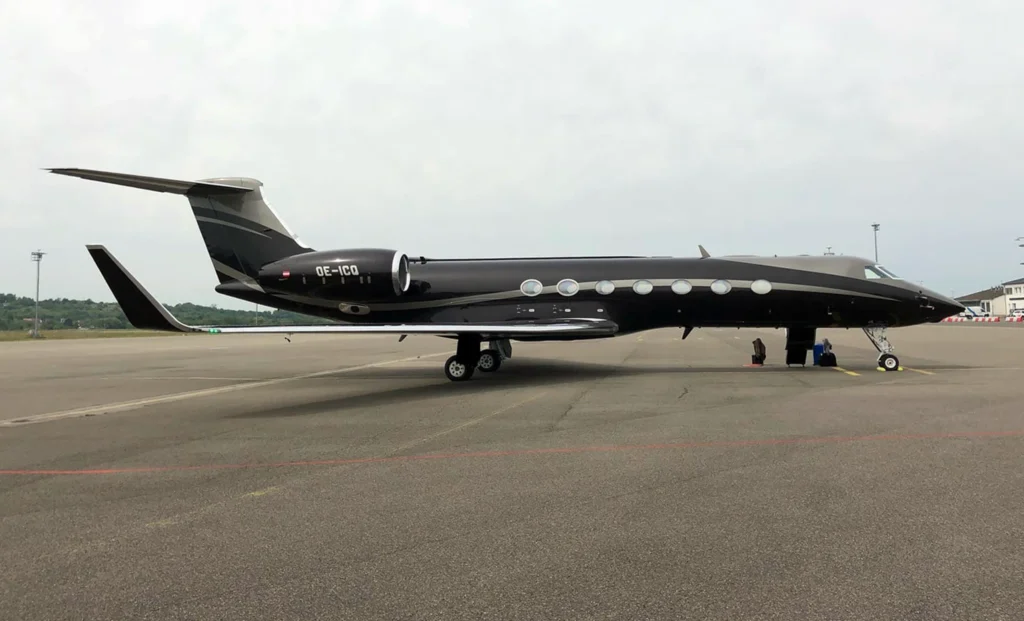
Best Private Jet for Long Range: The 2026 Definitive Guide
The definition of ultra-long-range aviation has undergone a radical transformation over the last decade. In the early 2000s, a 6,000-nautical-mile flight was considered the absolute frontier of corporate mobility. Best Private Jet for Long Range. Today, that distance represents the baseline for entry into the flagship category. The current era is defined not just by the ability to connect distant city pairs like New York and Tokyo or London and Perth, but by the physiological and operational quality of the time spent in the air. For the principal, the “best” aircraft is no longer merely a vehicle; it is a pressurized, high-altitude sanctuary designed to mitigate the biological toll of crossing ten time zones.
In 2026, the competitive landscape for long-range travel is dominated by a triopoly of manufacturers—Gulfstream, Bombardier, and Dassault—each pushing the boundaries of subsonic speed and fuel efficiency. However, selecting an aircraft based on its maximum brochure range is a fundamental error in strategic planning. The true range of a private jet is a dynamic variable influenced by payload, headwind components, and the necessity of fuel reserves. A jet that can fly 8,000 nautical miles with four passengers may struggle to reach 7,000 with a full cabin of fourteen and their associated baggage.
This editorial analysis seeks to provide a definitive framework for evaluating these assets. We will move beyond the superficial metrics of mahogany and leather to examine the forensic realities of “high-and-hot” airport performance, cabin altitude impact on cognitive function, and the systemic reliability of global support networks. For the sophisticated traveler or flight department, this is an exercise in identifying the most resilient tool for the preservation of human capital and global reach.
Understanding “best private jet for long range”
The quest to identify the best private jet for long range is frequently undermined by a lack of perspective. From a multi-perspective view, “best” shifts depending on whether the evaluator is a pilot, a CFO, or a passenger. To a pilot, the best aircraft is one with the highest thrust-to-weight ratio and the most intuitive avionics for managing transoceanic “dead zones.” To a CFO, it is the airframe with the highest residual value and the most predictable maintenance cycle. For the passenger, however, the metric is entirely biological: cabin pressure, humidity, and the absence of vibration.
Oversimplification in this sector usually manifests as “Range Blindness.” Many buyers assume that if a jet is rated for 7,500 nautical miles (nm), it can comfortably fly from Los Angeles to Sydney year-round. They fail to account for the “winter headwind” in the North Pacific, which can subtract 15% of an aircraft’s effective range. The risk of oversimplification is an unscheduled fuel stop in a remote location, which can add four hours to a mission and negate the primary advantage of private flight.
Furthermore, the concept of “Long Range” is increasingly tied to “Speed.” A jet that flies 7,000 nm at Mach 0.80 is a different tool than one that flies the same distance at Mach 0.90. Over a fifteen-hour flight, that 0.10 Mach difference saves nearly two hours of biological wear on the passengers. Therefore, the “best” jet is the one that offers the most efficient “High-Speed Cruise” rather than the highest “Long-Range Cruise” (which is often significantly slower).
Deep Contextual Background: The Evolution of Ultra-Long Range
The systemic evolution of the long-range jet began with the Gulfstream V and the Bombardier Global Express in the late 1990s. Before these aircraft, international travel often required technical stops in Gander or Shannon, extending travel times and increasing operational complexity. These first-generation ultra-long-range jets introduced the “direct-to” capability that changed the nature of global diplomacy and corporate expansion.
In the mid-2010s, the focus shifted from raw distance to “Cabin Health.” Manufacturers realized that while the planes could fly for fourteen hours, the humans inside were arriving exhausted due to high cabin altitudes (the equivalent pressure of being at 8,000 feet). This led to a technological arms race to lower cabin altitudes to under 3,000 feet, even at maximum cruise heights.
By 2026, the evolution has hit a “Physics Ceiling.” Subsonic flight is limited by the sound barrier, and range is limited by the fuel-carrying capacity of the wings. The current frontier is now focused on “Precision Avionics” and “Sustainability.” Modern long-range jets are designed to integrate seamlessly with NextGen air traffic control systems to find the most fuel-efficient routes in real-time, utilizing Sustainable Aviation Fuel (SAF) to mitigate the environmental scrutiny of ultra-long-haul missions.
Conceptual Frameworks and Mental Models for Range Evaluation
1. The Payload-Range Equilibrium
This model dictates that every additional passenger and bag added to the aircraft reduces the fuel that can be carried to stay under the Maximum Takeoff Weight (MTOW). When evaluating the “best” jet, one must look at the “Full-Fuel Payload.” A jet with a massive cabin but a small fuel-to-payload ratio is essentially a medium-range jet in a long-range jet’s clothing.
2. The Biological Delta
This framework measures the difference between the physical environment of the cabin and the baseline needs of the human body. It prioritizes cabin altitude, humidity levels, and 100% fresh air circulation. A jet that flys 8,000 nm but has a dry, high-altitude cabin is considered “low-performing” in this model because of the three-day recovery period required for the passenger post-flight.
3. The “High-and-Hot” Utility Framework
Range is useless if the jet cannot take off from a high-altitude airport on a hot day with full fuel. This mental model evaluates the aircraft’s wing design and engine thrust. The “best” jets are those that can depart from Aspen or Toluca in the summer and still reach a destination 5,000 miles away.
The Flagships: Key Categories and Performance Trade-offs
| Jet Category | Leading Models | Max Range (Approx) | Strategic Advantage | Primary Trade-off |
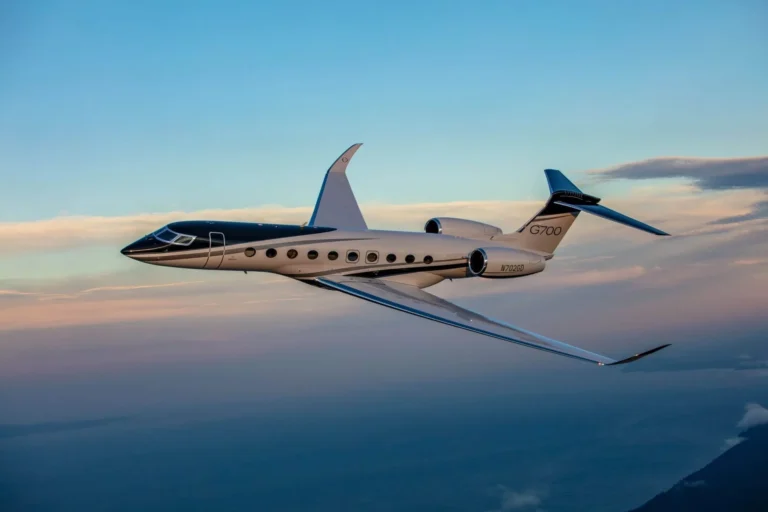
| The Speed Kings | G700, Global 7500 | 7,700 nm | High Mach cruise; 4-zone cabins | Massive hangar requirements |
| The Efficiency Titans | Falcon 8X, Falcon 10X | 6,450 – 7,500 nm | Tri-jet reliability (8X); widest cabin (10X) | Higher fuel burn in tri-jet configuration |
| The Long-Range Staples | G650ER, Global 6500 | 6,600 – 7,500 nm | Proven reliability; large pre-owned market | Older cabin tech compared to flagship |
| The New Guard | Global 8000, G800 | 8,000+ nm | Longest range in history; Mach 0.94 capable | Premium price; long delivery backlogs |
Decision Logic: The “80/20” Rule
The sophisticated buyer selects a jet based on 80% of their missions, not the 20% “outlier” flights. If the principal flies from London to New York 80% of the time, buying an 8,000 nm Global 8000 is an over-allocation of resources. However, if the mission profile involves frequent “Deep-Field” travel to emerging markets with limited infrastructure, the extra 1,000 nm of range acts as a critical safety and operational buffer.
Detailed Real-World Scenarios Best Private Jet for Long Range
Scenario 1: The Winter North-Atlantic Dash
A principal needs to fly from Paris to Los Angeles in January.
-
The Constraint: Strong winter headwinds frequently exceed 100 knots.
-
The Failure Mode: A jet with a “paper range” of 5,500 nm will be forced to stop in Bangor, Maine, for fuel, adding 2 hours to the trip.
-
The Success: Utilizing a G700 with a 7,700 nm range allows the pilot to maintain Mach 0.90 cruise even against the headwind, arriving in LA non-stop.
Scenario 2: The High-Altitude Departure (Toluca to Madrid)
Departing from Toluca, Mexico (elevation 8,460 ft), on a 25°C day.
-
The Constraint: Thin air reduces engine lift and thrust.
-
The Decision Point: A jet with a “super-critical wing” design can carry more fuel out of this environment.
-
Outcome: The “best” jet in this scenario isn’t the one with the longest range on paper, but the one with the most powerful engines that can lift the necessary fuel out of a thin-air environment.
Planning, Cost, and Resource Dynamics
The “Total Cost of Range” includes fuel burn, engine reserves, and the opportunity cost of the asset.
Estimated Operational Costs (Ultra-Long Range)
| Expense Item | Typical Hourly Rate | Annual Fixed Cost |
| Fuel (J-A1) | $3,500 – $5,000 | N/A |
| Engine / Airframe Reserves | $1,200 – $2,500 | N/A |
| Crew Salaries & Training | N/A | $350,000 – $600,000 |
| Hangarage (Large Cabin) | N/A | $60,000 – $150,000 |
| Insurance (Liability & Hull) | N/A | $80,000 – $120,000 |
Direct vs. Indirect Costs: While the fuel bill for a 14-hour flight is significant, the “Indirect Cost” of a mechanical failure in a remote location is much higher. For ultra-long-range missions, the “Support System” of the manufacturer (e.g., Bombardier’s service centers or Gulfstream’s Field Support Representatives) is a critical part of the aircraft’s value. A jet with no support in Asia is not the best jet for a principal who spends half their time in Singapore.
Tools, Strategies, and Support Systems
-
ForeFlight Performance Plus: Advanced flight planning software that accounts for real-time winds aloft and ETOPS (Extended-range Twin-engine Operational Performance Standards) requirements.
-
Satcom Direct / Starlink Aviation: High-speed connectivity is no longer a luxury for long-range travel; it is a necessity for the “Office in the Sky.”
-
Sustainable Aviation Fuel (SAF) “Book and Claim”: A strategy for long-range flyers to purchase SAF credits at airports where the fuel is available, even if their departure airport doesn’t have it, to meet ESG (Environmental, Social, and Governance) goals.
-
Cabin Management Systems (CMS): Integrated controls for lighting (circadian rhythm lighting), temperature, and humidity.
-
Predictive Maintenance (Health Monitoring): Systems like Gulfstream’s PlaneConnect that beam real-time engine data to the ground, allowing mechanics to prep for a repair before the plane even lands.
-
MedAire Integration: Essential for 12+ hour flights, providing real-time medical support for the crew and passengers via satellite.
Risk Landscape: Taxonomy of Compounding Failures
The risks of long-range flight are rarely singular; they are “chains” of events.
-
The Fuel-Weight Trap: A pilot realizes mid-flight that the winds are worse than predicted. They must reduce speed to save fuel, which increases the flight time, which may then push the crew past their legal “Duty Day” limit.
-
The “Dead Leg” Fatigue: On ultra-long flights, the crew’s cognitive performance is as critical as the engine’s performance. A failure in the “Crew Rest” compartment design can lead to landing errors after a 15-hour mission.
-
Technical Isolation: A mechanical issue with a highly proprietary part (e.g., a specific avionics card for a new G800) in a remote region can ground an aircraft for weeks if the manufacturer’s logistics chain is weak.
Governance, Maintenance, and Long-Term Adaptation
For a long-range asset to remain “the best,” it requires a rigorous governance structure.
-
Review Cycles: Every 24 months, the flight department must audit the aircraft’s actual mission profile against its intended use. If the “long-range” jet is only doing 2-hour hops, the maintenance costs (calculated in cycles rather than hours) will skyrocket.
-
Adjustment Triggers: If a principal moves their base of operations to a higher-altitude city or a hotter climate, the aircraft’s “takeoff performance” must be re-evaluated.
-
Layered Checklist:
-
[ ] Quarterly review of manufacturer “Service Bulletins.”
-
[ ] Annual “Deep Cleaning” of the environmental control system (HEPA filters).
-
[ ] Bi-annual crew training in “High-Altitude Physiology” and “Fatigue Management.”
-
Measurement, Tracking, and Evaluation Best Private Jet for Long Range
A successful long-range program is measured by “Mission Reliability” rather than “Flight Hours.”
Leading vs. Lagging Indicators
-
Leading Indicator: “Dispatch Reliability”—how often the plane is ready to fly at the scheduled time. A 99% rate is the gold standard.
-
Lagging Indicator: “Effective Hourly Cost”—the total annual spend divided by hours flown. If this exceeds 20% of the budget, the asset is being under-utilized.
Documentation Examples
-
The “Payload-Actual” Log: Comparing predicted fuel burn vs. actual fuel burn on missions over 10 hours.
-
The “Biological Recovery” Survey: A qualitative survey of the principal after 12-hour flights to measure post-flight fatigue and recovery time.
Common Misconceptions and Oversimplifications
-
“More engines are safer for long range.” Modern twin-engine jets are as safe as the older tri-jets (like the Falcon 900) due to incredible engine reliability and ETOPS-style certification.
-
“Newer jets fly faster.” Most jets are still limited by the sound barrier. The speed advantage of a new G700 is in its “High-Speed Cruise” efficiency, not its absolute top speed.
-
“The baggage compartment is irrelevant.” For a 14-day trip with 10 people, the baggage volume and weight can severely limit the range of even the largest jets.
-
“Cabin pressure doesn’t matter if you’re healthy.” Even for a world-class athlete, the difference between 3,000 ft and 8,000 ft cabin pressure is measurable in blood oxygen saturation and cognitive speed.
-
“Range is only about fuel.” Range is also about “Oil.” Some engines have oil-consumption limits that can become a factor on missions pushing 16+ hours.
-
“The pilot chooses the route.” In ultra-long-range flying, air traffic control and the “North Atlantic Tracks” often dictate a route that is 10% longer than the “Great Circle” distance.
Ethical, Practical, and Contextual Considerations
The ethics of ultra-long-range flight are increasingly scrutinized under the lens of carbon intensity. A 14-hour flight for a single passenger is one of the most carbon-intensive activities a human can perform. The “best” jets in 2026 are those that allow for “Optimized Profiles”—climbing to higher, more efficient altitudes faster and utilizing advanced winglets to reduce drag. Practically, the “Social License to Operate” for these jets depends on the owner’s commitment to SAF and carbon-mitigation strategies.
Conclusion
The pursuit of the best private jet for long range is a multidimensional optimization problem. It is a balance of aerodynamic physics, human biology, and global logistics. As manufacturers push toward the 8,000 nm mark and Mach 0.94 speeds, the differentiator is no longer just the distance, but the “Frictionless Mission.”
The ultimate long-range jet is the one that allows the global citizen to operate without geographic or physiological boundaries. It is an asset that provides the reliability of a commercial airliner with the privacy and restorative environment of a home. Best Private Jet for Long Range. In 2026, the judgment of “best” resides with the principal who arrives in a distant capital ready to perform, unburdened by the thousands of miles crossed to get there.