Best Private Jet for Family Travel: The 2026 Definitive Pillar Guide
The transition from commercial first-class travel to private aviation is frequently framed as a quest for luxury, yet for the multi-generational family, the primary driver is the reclamation of time and the mitigation of logistical friction. In the contemporary aeronautical landscape of 2026, the criteria for selecting an airframe have shifted. Best Private Jet for Family Travel. It is no longer sufficient to merely evaluate range and cruise speed; the modern family must consider cabin zone flexibility, noise-attenuation technology, and the increasingly complex landscape of regional airport accessibility.
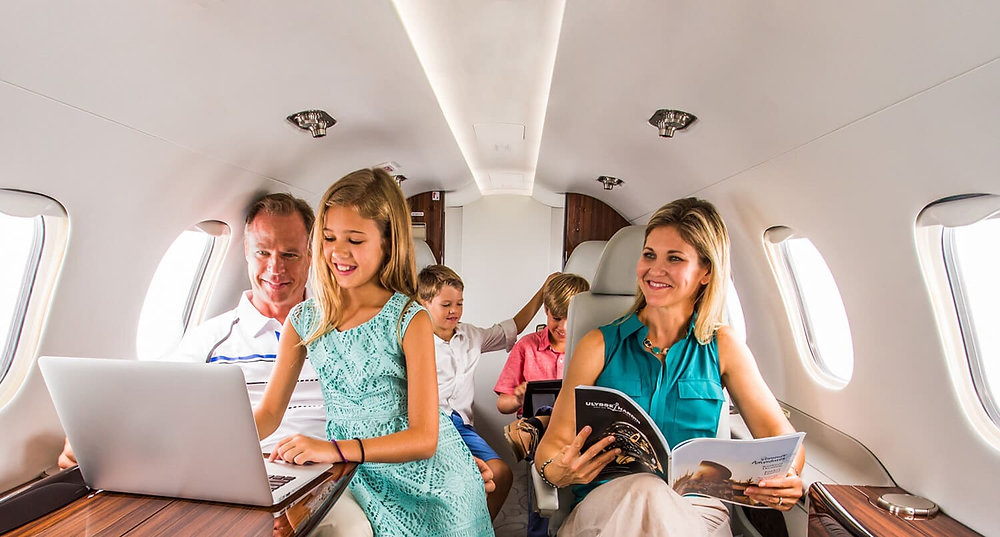
When a family unit travels, the aircraft becomes a mobile residence. This necessitates a forensic look at “mission profiles”—the specific patterns of travel that dictate whether a light jet for regional mountain hops or an ultra-long-range cabin for transcontinental holidays is the more prudent investment or charter choice. The complexity of these decisions is compounded by the varying needs of passengers, ranging from infants requiring specific pressurization considerations to elderly members needing low-threshold entry and flat-floor cabins.
As we examine the systemic forces at play, we must also address the environmental and economic governance of family flight. With the rise of Sustainable Aviation Fuel (SAF) mandates and the evolving “slot” scarcity at premier holiday destinations like Aspen, Nantucket, or Saint-Tropez, the “best” aircraft is often the one that offers the highest operational versatility. This editorial analysis serves as a definitive pillar for those seeking to understand the nuanced architecture of family-centric private aviation, prioritizing intellectual depth over superficial marketing aesthetics.
Best Private Jet for Family Travel
To accurately categorize the best private jet for family travel, one must first dismantle the oversimplification that a larger cabin is inherently superior. From a multi-perspective explanation, the ideal family aircraft is defined by its “Internal Ecosystem.” For the parents, this might mean a closed-door stateroom that allows for professional continuity during a ten-hour flight. For children, it is the stability of high-speed Ka-band connectivity and the safety of a 100% fresh-air circulation system.
A common misunderstanding in this sector is the belief that family travel is a “one-size-fits-all” mission. In reality, the requirements for a skiing trip to Eagle County (EGE) are diametrically opposed to a coastal relocation to the Mediterranean. The oversimplification risk lies in ignoring “Payload-Range” dynamics. A jet may have ten seats, but if a family of six travels with heavy winter gear and full fuel, that same jet may no longer have the performance capability to depart from a short, high-altitude runway.
Furthermore, the 2026 market has seen a shift toward “Acoustic Wellness.” Families are increasingly aware of the “Fatigue Tax” imposed by cabin noise. The best airframes are now evaluated by their decibel levels during cruise; an aircraft that maintains a 48-decibel environment (like the Gulfstream G700) allows for natural conversation without the vocal strain that often characterizes older regional jets. Understanding this requires a shift from viewing the jet as a vehicle to viewing it as a managed environment.
Deep Contextual Background: The Evolution of the Family Cabin
Historically, private jets were designed for the “Corporate Warrior”—individual executives traveling with briefcases and minimal luggage. Cabin layouts were dominated by the “club four” configuration, optimized for face-to-face meetings. However, the early 2000s saw a demographic shift. High-net-worth families began utilizing private aviation as a tool for “Privacy Preservation,” moving away from the public exposure of commercial terminals.
The mid-2010s introduced the “Third Living Space” concept. Manufacturers like Bombardier began designing cabins with distinct “zones.” This allowed the family unit to fragment within the aircraft: a dining zone for the children, a media zone for entertainment, and a quiet zone for the principals. This was a pivotal moment where the cabin became modular.
By 2026, the evolution has moved toward “Biophilic Design” and “Circadian Lighting.” Modern family jets now use lighting arrays that mimic the sun’s progression to minimize jet lag for younger travelers whose sleep cycles are more sensitive. The aircraft is no longer just a mode of transport; it is a proactive tool for physiological management, ensuring the family arrives at their destination ready to engage rather than needing a day of recovery.
Conceptual Frameworks for Family Aviation
1. The “Zonal Autonomy” Model
This framework evaluates an aircraft based on its ability to provide physical and acoustic separation. For family travel, an aircraft with three distinct cabin zones is the baseline for flights exceeding four hours. This prevents the “confinement friction” that occurs when toddlers and working adults share a single open space.
2. The “Short-Field/Long-Range” Paradox
Many family-favorite destinations (e.g., small Caribbean islands or mountain retreats) have runways that are too short for traditional heavy jets. This framework prioritizes aircraft with “High-Lift” wing designs—like the Embraer Praetor 600—which offer the range to cross oceans but the braking capability to land on 4,000-foot strips.
3. The “Payload-to-Volume” Ratio
Families do not travel light. Between strollers, sports equipment, and seasonal wardrobes, the “best” jet is often the one with the largest external baggage compartment. This model treats baggage volume as a primary safety and comfort metric, as cabin clutter is a significant risk factor during turbulence.
Key Categories and Technical Variations
Choosing the best private jet for family travel requires matching the airframe class to the specific family “Mission Profile.”
| Category | Typical Model | Family Advantage | Primary Trade-off |
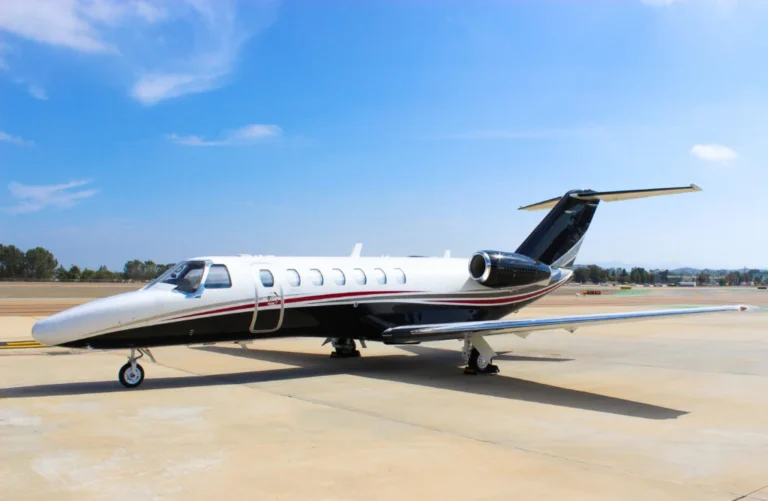
| Light Jet | Phenom 300E | Excellent for 2-hour regional hops | Very limited galley and lavatory space |
| Super-Midsize | Challenger 3500 | Best-in-class runway performance | Lacks a dedicated crew rest area |
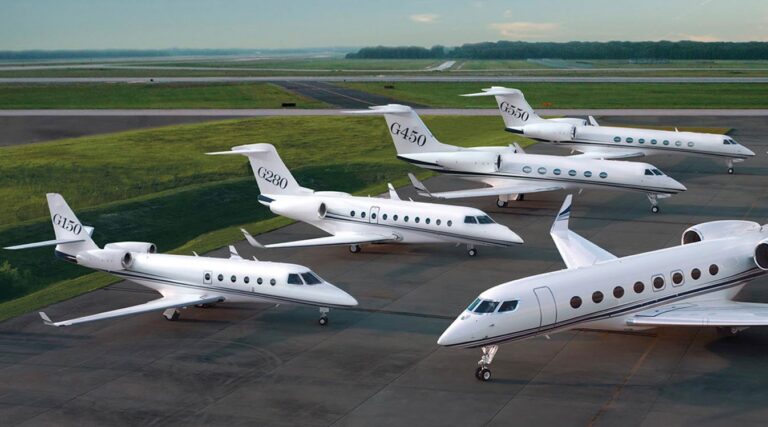
| Large Cabin | Gulfstream G500 | High speed and ultra-fresh air | Higher operating cost for short trips |
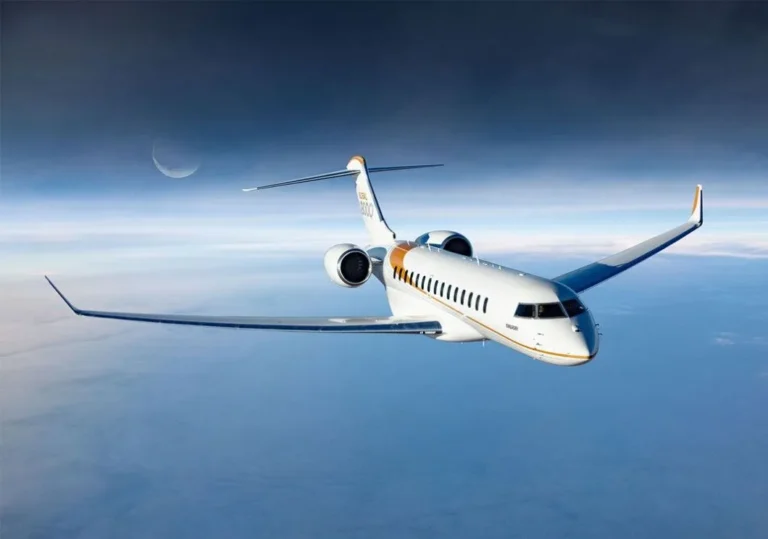
| Ultra-Long-Range | Global 7500 | Four zones; dedicated bedroom | Too large for many regional airports |
| Turboprop | Pilatus PC-12 | Large cargo door; rugged landing | Slower cruise and higher vibration |
Realistic Decision Logic
The 2026 market favor is currently leaning toward the Super-Midsize category for domestic family travel. It provides the “Stand-up Cabin” height (essential for parents assisting children) while maintaining a cost profile that is roughly 40% lower than heavy jets. However, for families flying “Intercontinental,” the Ultra-Long-Range class is the only category that ensures the cabin altitude remains below 3,000 feet, which significantly reduces dehydration and irritability in younger children.
Detailed Real-World Scenarios Best Private Jet for Family Travel
Scenario 1: The “High-Altitude Holiday” (Eagle/Aspen)
A family of five travels from Miami to Aspen in July.
-
The Constraint: High temperatures reduce engine thrust; the runway is surrounded by terrain.
-
The Failure: A heavy jet that must “fuel stop” in Denver because it cannot safely take off with enough fuel to reach Miami from Aspen’s thin air.
-
The Success: A Cessna Citation Latitude, designed for wide-cabin comfort but optimized for “Hot and High” performance.
Scenario 2: The “Multi-Generational Relocation”
Grandparents, parents, two children, and two nannies fly from London to New York.
-
The Constraint: Total passenger count is nine; total flight time is eight hours against strong headwinds.
-
The Decision Point: A mid-size jet would require a fuel stop in Gander or Bangor.
-
Second-Order Effect: Fuel stops add two hours to the trip, increasing the “meltdown risk” for younger children.
-
The Success: A Bombardier Global 6500, which can fly the mission non-stop while providing a master suite for the grandparents to rest.
Planning, Cost, and Resource Dynamics
The “Total Cost of Family Ownership” involves more than just the hourly fuel burn. It includes “Mission Capability” costs.
Range-Based Annual Cost Projections (2026 Estimates)
| Expense Item | Super-Midsize (Charter) | Large Cabin (Fractional) | Ultra-Long-Range (Owned) |
| Hourly Rate | $6,500 – $8,500 | $10,000 – $14,000 | $15,000 – $22,000 |
| Overnight Fees | Included | $1,500 – $3,000 | $3,000 – $6,000 |
| Catering (Family) | $800 – $1,500 | Included | $2,000+ |
| SAF Surcharge | 10-15% | 10-15% | Variable |
Direct vs. Indirect Costs: Families often overlook the “Ferry Factor.” If a family owns a jet based in Teterboro but wants to fly from Orlando to the Bahamas, they must pay for the aircraft to fly empty from NJ to Florida. For family travel, “Fractional Ownership” (like NetJets or Flexjet) often provides better cost-efficiency because the “Ferry Fees” are usually waived.
Tools, Strategies, and Support Systems
-
Ka-Band Connectivity: In 2026, “Good WiFi” is a safety tool. It keeps children occupied and calm, reducing pilot distraction.
-
Cabin Management Systems (CMS): Apps that allow passengers to control temperature and lighting from their personal devices.
-
External Baggage Cam: Useful for parents to verify that strollers and essential gear were actually loaded.
-
HEPA Filtration: 99.9% bacteria/virus removal is now a standard expectation for family health.
-
On-Board Humidification: Prevents the “dry throat” and sinus pain that leads to infant crying.
-
Advanced Soundproofing Kits: After-market upgrades that can reduce cabin noise by an additional 3-5 decibels.
-
Predictive Weather Apps: Tools like ForeFlight that allow the flight department to brief the family on “Turbulence Windows” so they can time meals accordingly.
-
Pet-Safe Restraint Systems: For families traveling with animals, specialized harnesses that integrate with the seat tracks.
Risk Landscape and Failure Modes
Family aviation is subject to “Compound Stressors.”
-
The “Short-Field” Overrun: A common failure mode where a family-loaded jet attempts to land at a private strip without accounting for “contaminated” (wet) runway conditions.
-
Medical Diversion: Unlike corporate flyers, families include high-risk age groups. The absence of a “MedAire” or similar tele-medical link on board is a significant systemic risk.
-
The “Baggage Shift” Hazard: In improperly loaded cabins, loose toys or carry-ons can become projectiles during clear-air turbulence.
-
Regulatory “Slot” Lockout: During peak seasons, if a family jet misses its “Landing Slot” at an airport like St. Tropez by 15 minutes, the next available slot may be six hours later, leaving the family circling or diverted.
Governance, Maintenance, and Long-Term Adaptation
If a family chooses full ownership, the “Governance” of the asset must be rigorous.
-
Audit Cycles: Every six months, the flight department should perform a “Mission Alignment Audit.” If the family’s travel has shifted from regional to international, the aircraft may no longer be the “best” tool.
-
Interior Maintenance: Family jets undergo 300% more “wear and tear” on interiors than corporate jets. A “Refurbishment Reserve” must be part of the annual budget.
-
Layered Checklist for Family Missions:
-
[ ] Verify cabin altitude settings for infants.
-
[ ] Confirm “Ka-Band” status with the provider.
-
[ ] Pre-order “Short-Field” performance charts for the destination.
-
[ ] Audit the “Survival Kit” for child-specific supplies (PFDs, etc.).
-
Measurement, Tracking, and Evaluation
Evaluation of success in family travel is qualitative but can be tracked through “Friction Metrics.”
-
The “Door-to-Destination” Delta: Measuring the total time from the front door of the house to the front door of the vacation home, compared to commercial alternatives.
-
The “Recovery Rate”: Tracking how many hours of sleep/rest are required after a flight. A “successful” airframe (with low cabin altitude) should result in a recovery rate of near zero.
-
Operational Reliability: Percentage of missions delayed by mechanical issues. For families, a 5% “AOG” (Aircraft on Ground) rate is often the threshold for switching providers.
Common Misconceptions and Industry Myths
-
“The Vision Jet is perfect for families.” It is a revolutionary single-engine jet, but its payload is very limited. For a family of four with luggage, it is often “weight-restricted.”
-
“Newer jets are always quieter.” Not necessarily. Some legacy Gulfstreams with specific “Hush Kits” outperform newer, smaller jets in acoustic comfort.
-
“WiFi is guaranteed.” Even in 2026, satellite “dead zones” exist over certain parts of the ocean and polar regions.
-
“Private jets land anywhere.” Insurance carriers often restrict landings at certain regional airports with “unimproved” runways.
-
“The pilot can just wait for us.” Duty-time regulations are strict. If a family is three hours late, the crew may “time out,” grounding the jet for 10-12 hours of mandatory rest.
-
“Baggage is unlimited.” Every pound of baggage is a pound of fuel not carried. On long trips, you must choose between “all the bags” or “all the range.”
Ethical, Practical, or Contextual Considerations
The ethics of family private aviation in 2026 are increasingly tied to the “Social License to Operate.” Families are opting for “Carbon Neutral” flight programs not just for the environment, but to ensure long-term access to airports that are beginning to ban high-emission aircraft. Practically, the “best” jet is the one that allows a family to maintain their lifestyle without becoming a target for “Environmental Shaming.” This involves utilizing SAF and selecting airframes with the latest “Stealth-Quiet” engine technology.
Conclusion
The selection of the best private jet for family travel is an exercise in “Environmental Engineering.” It is about creating a sanctuary at 45,000 feet that protects the family unit from the chaos of global transit. Whether it is a Super-Midsize jet that can “land on a dime” in the Caribbean or an Ultra-Long-Range cabin that serves as a trans-Atlantic bedroom, the ultimate luxury is the preservation of the family’s physiological and psychological well-being.
In the 2026 landscape, the most sophisticated travelers are those who view their aircraft not as a status symbol, but as a “Time Multiplier.” By understanding the payload limits, acoustic profiles, and zonal configurations of the modern fleet, a family can ensure that their journey is as restorative as the destination itself. The stratosphere is no longer just a corridor; for the modern family, it is home.