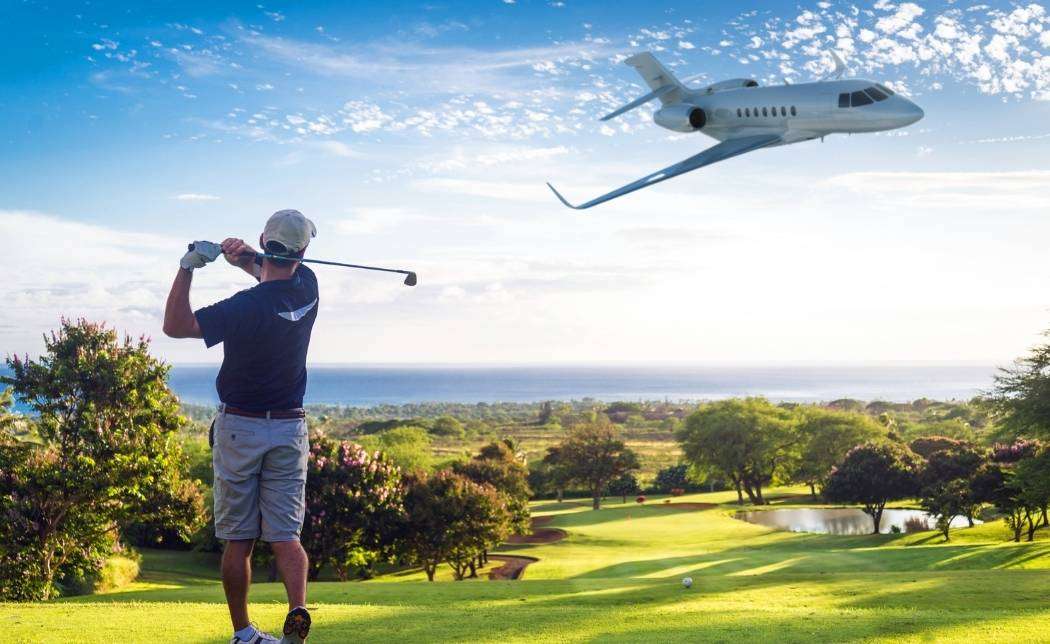
Luxury Golf Destinations Jet United States: The 2026 Definitive
The convergence of private aviation and elite golf in the United States represents more than a lifestyle choice; it is a high-stakes logistical puzzle. For the principal, a golf excursion is an exercise in time sovereignty. Luxury Golf Destinations Jet United States. The objective is to collapse the distance between a metropolitan boardroom and the first tee of a remote links course, bypassing the friction of commercial hubs and the unpredictability of regional ground transit. In the current 2026 landscape, this sector is defined by the emergence of “destination-pure” golf—properties built on land so marginal and remote that they are functionally inaccessible without a specialized flight plan.
As we examine these corridors of play, we find that the traditional pillars of luxury—gold-plated service and manicured gardens—have been replaced by a more rigorous standard: architectural integrity and agronomic perfection. The modern golfer seeks out the “firm and fast” conditions of the Nebraska Sandhills or the rugged coast of Oregon, environments where the soil allows for the ground-game strategy of the Scottish icons. These sites, however, are often hundreds of miles from the nearest major airport, making the choice of airframe and the proximity of the Fixed Base Operator (FBO) the primary variables in the success of the trip.
This editorial analysis serves as a definitive pillar for those navigating the intersection of the stratosphere and the fairway. We will move beyond superficial resort listings to explore the systemic realities of “Jet-to-Tee” travel: the performance limits of heavy jets on short regional runways, the seasonal volatility of turfgrass across the four major American climate zones, and the evolving infrastructure of private air terminals that cater specifically to the golfing elite. This is a study in logistical optimization, designed for an audience that demands intellectual depth and operational clarity.
luxury golf destinations jet united states
To grasp the mechanics of luxury golf destinations jet united states, one must view the trip as a single, continuous “mission profile.” From a multi-perspective explanation, luxury is no longer a static amenity; it is the fluidity of the transition. To the pilot, luxury is an FBO that can handle a Global 7500 with a quick-turn fuel agreement. To the golfer, it is a course that preserves its architectural “soul” while maintaining greens that roll at a consistent 12 on the stimpmeter.
A common misunderstanding in this niche is that a “private jet resort” must have its own runway. In reality, some of the most prestigious destinations utilize “reliever” airports located 20 to 40 minutes away to maintain the tranquility of the golf course environment. The oversimplification risk here is assuming that any private jet can land at any regional airport. The “Performance Delta”—the difference between a jet’s required landing distance at sea level versus a high-altitude desert field—frequently dictates the destination. An owner of a heavy jet might find themselves locked out of certain elite coastal strips that are perfectly accessible to a light jet or a turboprop.
Furthermore, the 2026 market has seen a shift toward “Destination Minimalism.” These are places where the luxury is found in the dirt, not the clubhouse. Sites like Bandon Dunes or Sand Valley have intentionally limited their “traditional” luxury amenities to focus entirely on the walking-only, caddie-led golf experience. This requires a different kind of aviation planning—one that accounts for the transport of high-value gear (ShipSticks is often the preferred choice to avoid cabin clutter) and the arrival of multiple “waves” of players from different points of origin.
The Systemic Evolution of Remote Golf Hubs
The history of American golf travel began with the “Grand Hotels” of the railway era—Pinehurst and The Greenbrier—where the elite arrived by private car for weeks at a time. The second wave, the “Jet Age,” saw the rise of the Florida and Scottsdale corridors, where proximity to major metropolitan centers and reliable weather created a year-round “Target Golf” culture.
However, the third and current wave is the “Minimalist Renaissance.” Since the late 1990s, led by developers like Mike Keiser, there has been an aggressive movement toward “finding” golf on sandy, remote sites rather than “building” it. This has moved the center of gravity away from the traditional hubs. States like Nebraska, Wisconsin, and even the remote stretches of Texas and Utah have become the new “power centers.” These sites are characterized by “marginal land” that is aerated and drained naturally, providing the “links” feel once exclusive to the UK.
The systemic result is a “bifurcation” of the luxury market. On one side are the “Legacy Hubs” (Monterey, Palm Springs) with massive infrastructure and high-traffic airports. On the other are the “Aviation-Dependent Outposts.” The latter group has driven a surge in the acquisition of Super-Midsize jets (Challenger 3500, Citation Longitude) that have the range to reach these outposts and the short-field performance to land on their 5,000-foot runways.
Conceptual Frameworks for Logistical Excellence
1. The “Tee-Time Sensitivity” Framework
This model treats a tee time as a “non-negotiable arrival slot.” Unlike a boardroom meeting that can be pushed back 15 minutes, a prime morning tee time at a top-tier destination is often secured 12 months in advance. The framework advocates for a “Logistical Buffer” of 90 minutes from “Wheels Down” to “Tee Off.” If the drive from the FBO to the course is 45 minutes, the jet must land no later than 45 minutes before the start to allow for luggage transfer and warm-up.
2. The Agronomic-Climate Mental Model
Luxury is the absence of “turf stress.” This framework requires matching the flight plan to the “Growing Season.” A mistake in 2026 is flying a jet to a “Bermuda grass” course in the Carolinas in November without realizing the course has “overseeded,” resulting in wet, slow conditions. The framework prioritizes “Fescue and Bentgrass” destinations for summer play and “Dormant-Sand” destinations for winter.
3. The “Payload-Range” Equilibrium
Golfers rarely travel light. Between four passengers, four sets of clubs, and overnight bags, a light jet can quickly hit its weight-and-balance limit. This framework forces the owner to evaluate if the “mission” requires a larger cabin not for the distance, but for the cubic feet of baggage space. A failure here results in the “luggage-chase,” where clubs must be sent by ground, negating the “jet-to-tee” speed.
Primary Categories of Elite Golf Corridors
| Category | Primary Locations | Aviation Profile | Best For |
| Coastal Links | Oregon, California, Maine | High winds; coastal fog risk | Architectural Purists |
| Desert Target | AZ, NV, Palm Springs | High/Hot performance limits | Winter “Sunshine” Missions |
| Sandhill Outposts | Nebraska, Wisconsin | Remote; limited reliever fields | Purest Playability |
| Piedmont Classics | GA, NC, VA | High-density FBO infrastructure | Corporate Entertaining |
| Alpine Peaks | CO, UT, MT, WY | Oxygen-deprived ball flight | Scenic/Multi-Sport Trips |
Realistic Decision Logic
The choice of destination is often governed by the “Radius of Convenience.” For an East Coast principal, the Sandhill outposts are a 3-hour flight, making them a “Long Weekend” staple. For a West Coast principal, the Coastal Links of the Pacific Northwest are the primary draw. The logic is: Minimize the flight time to maximize the daylight hours on the course.
Real-World Scenarios and Operational Logic Luxury Golf Destinations Jet United States
Scenario 1: The “Monterey Fog” Divert
A group flying a Gulfstream into Monterey (MRY) for a 9:00 AM round at Pebble Beach.
-
The Conflict: Marine layer fog drops visibility to 1/4 mile.
-
The Decision: Divert to San Jose (SJC) or Salinas (SNS).
-
The Result: A 15-minute flight becomes a 90-minute ground transfer.
-
Mitigation: Successful departments check the “Taf” (Terminal Aerodrome Forecast) 4 hours out and have a car pre-staged at the divert airport.
Scenario 2: The “Nebraska Crosswind”
A midsize jet landing on a single-runway regional field in the Sandhills.
-
The Conflict: Sustained 30-knot crosswinds exceed the aircraft’s safety limits.
-
The Failure: Attempting the landing anyway, resulting in a runway excursion.
-
Correct Logic: Land at a larger hub (e.g., North Platte) and take a 2-hour SUV transfer. Luxury is the safety of the arrival, not the proximity of the tarmac.
Planning, Cost, and Resource Dynamics
The “Total Mission Cost” of a golf jet excursion is heavily weighted toward the aviation side, yet the golf costs at the highest level are no longer negligible.
Estimated Cost of 4-Day Golf Mission (4 Players)
| Item | Midsize Jet (Total) | Luxury Golf Resort (Total) | Variable Factor |
| Flight Hours (10 hrs) | $60,000 – $85,000 | N/A | Fuel Burn & Surcharges |
| Ground Handling / FBO | $1,500 – $3,500 | N/A | Ramp Fees & Hangarage |
| Greens Fees & Caddies | N/A | $8,000 – $12,000 | Peak Season Premium |
| Lodging (4 Suites) | N/A | $10,000 – $20,000 | “On-Property” Premium |
| ShipSticks / Logistics | $1,200 | Included/Optional | Convenience vs. Cabin Space |
Direct and Indirect Costs: The largest indirect cost is “Opportunity Cost of Daylight.” A flight that departs at 8:00 AM instead of 6:00 AM can be the difference between playing 18 holes or 36 holes on the day of arrival. In 2026, many luxury golf destinations jet united states now offer “Twilight Jet Rates,” encouraging late-afternoon arrivals to ensure the players are on property for an early morning start the following day.
Tools, Strategies, and Support Systems
To manage the complexity of these trips, the following 6–8 pillars are essential:
-
FBO Concierge Integration: Using FBOs that have direct radio links to the resort’s guest services.
-
Advanced Weather Modeling: Tools like “CustomWeather” that provide micro-climate forecasts for specific fairways, not just the nearest airport.
-
ShipSticks Professional: A system that ensures clubs arrive 48 hours early, allowing the jet cabin to remain a clean boardroom environment.
-
Specialized Caddie Booking: Engaging “Forecaddies” who are familiar with the group’s specific playing style before they land.
-
Aviation-Grade Travel Insurance: Policies that cover “AOG” (Aircraft on Ground) events, ensuring the group can charter a replacement jet to make their return boardroom commitment.
-
Fleet Diversification: Using a jet card or fractional share to access a light jet for short-field outposts while keeping a heavy jet for transcontinental missions.
-
Nutrition and Hydration Management: Pre-stocking the jet with specific electrolyte and protein profiles designed for recovery after a 36-hole day.
-
Real-Time Slot Management: Using digital tools to track “Airport Arrival Slots” during high-demand events like the Masters or the US Open.
The Risk Landscape: Weather, Weight, and Wait Times
Aviation and golf share a common enemy: the atmosphere.
-
The “Convective” Chain: A summer thunderstorm in the South doesn’t just cancel golf; it grounds the jet. If the storm hits at 3:00 PM, the aircraft might miss its “Departure Window,” leading to a crew “Duty Day” expiration.
-
The “Performance” Risk: High-altitude courses (e.g., in Utah or Colorado) significantly impact ball flight (10% more distance). However, they also impact jet engines (20% less thrust). A pilot who doesn’t calculate the “Density Altitude” might find they can land at an elite mountain strip but cannot legally take off with a full load of golfers and fuel.
-
The “Ramp Saturation” Risk: During peak golf weeks (e.g., Bandon in June), FBOs can run out of hangar space. Leaving a $50M jet on a salt-air ramp for four days is an “unforced error” in asset management.
Governance and Long-Term Program Adaptation
The successful management of a “Golf Jet” program requires a “Post-Mission Review.”
-
Annual Airport Audit: Review which regional airports provided the best FBO service versus drive-time.
-
Agronomic Review: Did the ” Bentgrass” greens live up to the luxury promise in August? If not, adjust the destination for next year.
-
Checklist for Mission Adaptation:
-
[ ] Did the baggage capacity meet the needs of 4 players?
-
[ ] Was the “Jet-to-Tee” transition under 90 minutes?
-
[ ] Did the FBO provide “Contract Fuel” pricing to offset the trip cost?
-
[ ] Were the clubs waiting at the bag drop upon arrival?
-
Measurement, Tracking, and Evaluation
How do you grade the success of luxury golf destinations jet united states?
Leading vs. Lagging Indicators
-
Leading Indicator: “Pre-Flight Prep Time”—how early the FBO and Resort were coordinated.
-
Lagging Indicator: “Effective Hourly Rate”—total trip cost divided by the number of holes played in “Peak Condition.”
Documentation Examples
-
The “Flight-Fairway Dossier”: A one-page summary for the principal showing the arrival airport, the FBO contact, the drive time, and the 1st tee time.
-
The “Turf Integrity Report”: A qualitative assessment of the course’s playing surfaces compared to its “Top 100” peers.
-
The “Cabin Utilization Log”: Tracking how much work was actually accomplished during the flight versus the cost of the cabin.
Common Misconceptions and Industry Myths
-
“Pebble Beach is the only jet destination.” While iconic, Pebble is often congested. Outposts like Sheep Ranch or The Loop (Michigan) offer a more “private” luxury.
-
“Carts are a luxury.” At the highest level, the only way to play is walking with a professional caddie. Carts are seen as an operational compromise.
-
“Bigger jets are always faster.” On a 400-mile hop to a regional strip, a turboprop or light jet can often land closer to the course, beating a heavy jet that has to land at a major hub and endure a 2-hour drive.
-
“Weather in the South is always good.” Summer humidity can make golf miserable and afternoons “unflyable” due to pop-up cells.
-
“The clubhouse is the heart of the experience.” In 2026, the “heart” is the 14th green or the 16th tee. The clubhouse is merely a transition point.
-
“You can book these trips last minute.” To secure the “Jet-to-Tee” synergy at a top-100 course, a 12-month planning horizon is the industry standard.
Conclusion
The pursuit of luxury golf destinations jet united states is a testament to the value of the “Human Experience.” It is the ultimate merger of industrial power and natural beauty. For the principal, the jet is not just a vehicle; it is the bridge that allows them to experience the “Architectural Genius” of the world’s best course designers without sacrificing the “Temporal Integrity” of their professional lives.
Success in this arena is born of patience and intellectual honesty. It requires admitting that a flight plan is only as good as the weather, and a golf course is only as good as its drainage. By treating the excursion as a unified mission—where the performance of the airframe is as critical as the speed of the greens—the elite traveler can ensure that their time on the ground is as soaring as their time in the air.