Top Events for Private Jets in America: The 2026 Definitive Pillar
The arrival of a business jet at a major American event is a study in precision logistics and systemic pressure. In 2026, the intersection of private aviation and high-profile gatherings—be they sporting championships, cultural festivals, or geopolitical summits—has reached a level of complexity where the flight itself is often the simplest part of the mission. Top Events for Private Jets in America. The true challenge lies in the “invisible” infrastructure: the FAA-mandated slot reservation programs, the competitive acquisition of ramp space, and the management of “special event fees” that can escalate into the tens of thousands of dollars.
As the US private aviation sector experiences sustained growth, the traditional “show up and land” model has been permanently replaced by a tiered, reservation-heavy landscape. For the modern flight department or charter client, a successful trip to a Tier-1 event is defined by the quality of the “FBO (Fixed Base Operator) experience”—how quickly passengers move from the cabin to their ground transport and how effectively the aircraft is protected from the corrosive elements of high-traffic, temporary parking environments.
This definitive reference explores the systemic forces shaping the most significant travel corridors in the United States. We will examine the operational mechanics of the “Super Bowl Effect,” the agronomic and weather-related risks of the Masters, and the emerging logistical burden of the 2026 FIFA World Cup. This analysis prioritizes intellectual depth and practical clarity, serving as a pillar for those who view private aviation not just as a luxury, but as a strategic tool for time sovereignty in an increasingly congested airspace.
top events for private jets in america
To categorize the top events for private jets in america, one must move beyond a simple calendar and look at the “Aviation Footprint” each event leaves on the national airspace. From a multi-perspective explanation, these events are defined by their “Resource Saturation Point.” For a pilot, a top event is one that triggers a Temporary Flight Restriction (TFR) or a mandatory slot program. For the owner, it is an event where the demand for overnight parking far exceeds the available pavement at the primary FBO.
A common misunderstanding is that proximity to the venue is the only metric for success. In reality, the “best” airport for an event is often a secondary or “reliever” field located 30 to 50 miles away. For example, during the Super Bowl LX in Santa Clara, the rush toward San Jose (SJC) creates a logistical bottleneck that can result in “holding patterns” lasting hours. Sophisticated operators often choose Hayward (HWD) or Oakland (OAK), sacrificing a few miles of driving for the certainty of a guaranteed landing slot and a faster departure.
Oversimplification risks often emerge in the belief that a “Jet Card” or “Fractional Share” eliminates event-day friction. While these programs offer guaranteed availability, they do not guarantee “Slot Authority.” Even the most expensive aircraft cannot land if the FAA has closed the arrival window due to volume. Understanding the “Event Horizon”—the specific 72-hour window where the system reaches peak stress—is critical for any principal seeking to maintain their schedule.
The Systemic Evolution of Event-Based Aviation
The history of event-based private travel in America has transitioned from an unregulated “first-come, first-served” era to a digitally managed, high-fee environment. In the late 20th century, major events like the Kentucky Derby saw aircraft parked on grass strips or peripheral taxiways with minimal oversight. Today, every square foot of asphalt is mapped and monetized.
The 2026 landscape is defined by the “FIFA World Cup Effect.” Unlike a single-site event like the Super Bowl, the 2026 World Cup is a continent-wide logistical strain, spreading traffic across 11 US host cities. This has forced a shift in how FBOs manage their crews and equipment. We are seeing the rise of “Mobile FBO Teams”—ground handlers who are deployed from low-traffic regions to “surge” locations to handle the influx of ultra-long-range jets.
Furthermore, the environmental governance of these events is changing. Major gatherings are increasingly under scrutiny for their carbon footprint. This is leading to the mandatory “SAF (Sustainable Aviation Fuel) Uplift” programs at airports like Aspen during the X Games or Miami during Art Basel. Luxury is no longer just about the transition; it is about the “Compliance Profile” of the arrival.
Conceptual Frameworks for Event Logistics
1. The “Slot-to-Tee” Mental Model
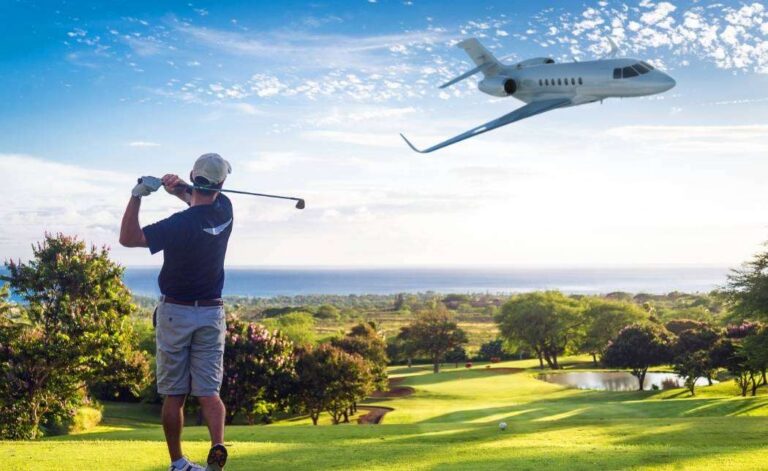
Primarily used for golf and sporting events, this framework calculates the “Total Transition Time.” It accounts for the time from the FBO ramp to the venue gate. At the Masters in Augusta, the framework prioritizes “Drop and Go” missions—where the jet drops passengers at Augusta Regional (AGS) and immediately repositions to a nearby field like Daniel Field (DNL) to avoid the $5,000+ overnight parking fees.
2. The “Ramp Saturation” Framework
This model evaluates the risk of “Remote Parking.” When an airport reaches capacity, aircraft are often towed to “Overflow Ramps” that lack security or ground power. The framework forces a decision: pay a premium for “Hangarage” at a primary hub or land at a “Reliever” where the aircraft can stay “Active” on the main ramp.
3. The “C-Suite Rebound” Model
Major business events like the Consumer Electronics Show (CES) in Las Vegas create a massive “Rebound Wave.” Thousands of jets attempt to depart within a 4-hour window on the final day. This framework advocates for a “Staggered Departure”—leaving 6 hours early or 12 hours late—to avoid the 90-minute taxi queues that define the Vegas ramp in early January.
Key Event Categories and Aviation Profiles
| Event Category | Primary Hubs | Aviation Profile | Primary Trade-off |
| Sports (Super Bowl/F1) | SJC, LAS, MIA | High-intensity “Peak” windows | Extreme “Event Fees” ($10k+) |
| Cultural (Art Basel/Sundance) | OPF, SLC, PKP | Long-duration parking needs | Hangarage scarcity; weather risk |
| Golf (Masters/US Open) | AGS, SOP, MYR | Caddie/Club logistics; rural FBOs | Limited “Heavy Jet” pavement |
| Tech/Business (CES/WEF) | LAS, VGT, HND | High-volume corporate “Waves” | Long taxi delays; slot volatility |
| Political (G20/UNGA) | MIA, TEB, HPN | Heavy security/TFR restrictions | Frequent “No-Fly” groundings |
Realistic Decision Logic
The decision to attend a Tier-1 event is governed by the “Utility-to-Friction” ratio. For a 2-hour game, 4 hours of flight delays and $20,000 in fees may be acceptable for a sponsor, but for a leisure traveler, the “Reliever Airport” strategy (landing at a secondary field and taking a helicopter transfer) becomes the only logical path to maintaining the “luxury” of the experience.
Real-World Scenarios and Operational Logic Top Events for Private Jets in America
Scenario 1: The “Augusta Weather Divert”
A group is flying into Augusta (AGS) for the final round of the Masters.
-
The Conflict: A sudden line of thunderstorms triggers a TFR “Ground Stop.”
-
The Decision: Divert to Columbia (CAE) or Atlanta (PDK).
-
The Result: The primary landing slot is lost. Even when the storm clears, the group is at the back of a 50-plane queue.
-
Mitigation: Successful operators book “Dual Slots”—one at the primary and one at a reliever—accepting the non-refundable fee as an “Insurance Policy” for their time.
Scenario 2: The “Vegas Ramp Lockout”
A private jet arrives at Henderson (HND) for the Formula 1 Las Vegas Grand Prix without a pre-paid parking reservation.
-
The Conflict: The FBO is strictly “Drop and Go” only.
-
The Failure: The crew has no “Recovery Plan” and must fly the empty aircraft to Phoenix (PHX) for the weekend.
-
Second-Order Effect: The crew hits their “Duty Day” limit while repositioning, meaning they cannot legally fly the passengers home on Sunday night.
Planning, Cost, and Resource Dynamics
The economics of the top events for private jets in america are defined by “Surge Pricing” that often shocks even the wealthiest principals.
Estimated Event Cost Matrix (Per Mission, 48-Hour Stay)
| Item | Standard Rate | Event Rate (2026) | Rationale |
| FBO Special Event Fee | $500 | $5,000 – $35,000 | Ramp congestion management |
| Overnight Parking | $250 | $1,500 – $4,000 | Scarcity of secure pavement |
| Hangarage (If available) | $1,500 | $5,000 – $10,000 | Climate/Security protection |
| Fuel Surcharge | Base | + $2.00 / Gallon | Surge demand on local tankers |
| Ground Transport | $600 | $3,500+ | Luxury SUV scarcity |
Direct and Indirect Costs: The largest “hidden” cost is the “Crew Repositioning Fee.” If your aircraft cannot park at the event hub, you must pay for the fuel and flight time to move the plane to a secondary city, plus the hotel and transport for the pilots. For a heavy jet, this “empty leg” can easily add $15,000 to the trip’s total.
Tools, Strategies, and Support Systems
-
FAA “Special Traffic Management Programs” (STMP): A digital portal where slots must be snagged the second they are released.
-
FBO Special Event Teams: Specialized concierge units that only handle “Super Bowl” or “Masters” arrivals.
-
Helicopter Shuttles: Using providers like Blade or HeliFlite to bypass the 2-hour traffic jams surrounding stadiums and festival grounds.
-
AirNav/ForeFlight Event Overlays: Essential for pilots to see real-time TFRs and “Notice to Air Missions” (NOTAMs).
-
ShipSticks / Luggage Forwarding: Removing the weight of golf clubs or ski gear from the cabin to allow for more fuel/passengers on short, performance-limited runways.
-
Carbon Offset Integration: Many FBOs at “top events” now offer on-site carbon credits to satisfy corporate ESG (Environmental, Social, and Governance) mandates.
-
Mobile Mechanic Staging: Top-tier management companies stage a mechanic with common spare parts at major hubs (like LAS during CES) to prevent an “AOG” (Aircraft on Ground) event from ruining a return trip.
Risk Landscape: Congestion and Compounding Failures
Attending a major event is a study in “Compounding Risks.”
-
The “Tarmac Delay” Trap: Even with a slot, an airport like Teterboro (TEB) during UNGA (United Nations General Assembly) can have a 2-hour wait for departure. If a passenger is 15 minutes late, the aircraft misses its “Release Window,” and the delay can compound into 4 hours.
-
The “Fuel Exhaustion” Risk: During peak event waves, fuel trucks at small airports can actually run dry. An aircraft that lands with “minimum reserves” may be grounded for 12 hours waiting for a tanker to arrive from the nearest refinery.
-
The “Security Lock-down”: If a VIP (like the President) makes an unannounced appearance at an event, the entire airport can be “Hard-Stopped” for 60 minutes, with no arrivals or departures allowed.
Governance, Maintenance, and Long-Term Adaptation
As major events become “Macro-Logistical” challenges, the governance of the flight program must adapt.
-
Audit Cycles: Reviewing the “FBO Performance” after every major event. Did they handle the luggage correctly? Was the catering on time?
-
Adjustment Triggers: If an airport’s “Special Event Fee” increases by more than 50% year-over-year, the department should trigger a “Reliever Airport Analysis” to find more cost-effective alternates.
-
Layered Checklist for Event Missions:
-
[ ] Confirm FAA Slot Reservation (60-90 days out).
-
[ ] Pre-pay FBO Special Event Fees.
-
[ ] Verify “Repositioning Airport” availability if parking is denied.
-
[ ] Schedule “Mobile Detailing” to remove ramp soot/salt after the event.
-
Measurement, Tracking, and Evaluation
How do you evaluate if a $100,000 jet trip to the Super Bowl was “Successful”?
Leading vs. Lagging Indicators
-
Leading: “Slot Variance”—The difference between the requested arrival time and the FAA-assigned time. A variance of <30 minutes indicates high planning quality.
-
Lagging: “Effective Passenger Cost”—The total mission cost divided by the number of passengers and the hours of “Event Time” actually experienced.
Documentation Examples
-
The “Mission Post-Mortem”: A document detailing all delays, FBO service failures, and unexpected costs.
-
The “Ramp Integrity Photo Log”: Essential for proving any hangar rash or towing damage that occurred during the “chaos” of event parking.
Common Misconceptions and Industry Myths
-
“I have a jet, I can land whenever I want.” The FAA and local authorities override all private property rights during major events.
-
“Teterboro is the only way to get to NYC.” During major events, White Plains (HPN) or even Islip (ISP) can be faster due to lower taxi congestion.
-
“Special Event Fees are just a scam.” They are a necessary evil used to fund the extra security, temporary towers, and “Surge Staffing” required to keep the airport safe.
-
“If the weather is clear, we are good.” Airspace congestion in the US is often “Volume Related,” not weather related. Clear skies do not mean an empty arrival queue.
-
“Private travel is faster than commercial.” On a “Super Bowl Sunday,” a commercial flight with a “Priority Gate” can actually depart faster than a private jet stuck in a 40-plane queue at a small executive field.
-
“The Super Bowl is the busiest event.” In terms of sustained volume, the Masters in Augusta often creates a more complex logistical “knot” because it lasts for a full week in a region with limited aviation infrastructure.
Conclusion
The pursuit of the top events for private jets in america is a testament to the value of human presence. In an age of digital connectivity, the elite still choose to navigate the stratosphere and the logistical minefields of major hubs to be physically present at the world’s most significant moments.
Success in this arena requires a move from “Reaction” to “Forecasting.” By understanding the conceptual frameworks of slot management and ramp saturation, and by respecting the operational risks of “Systemic Overload,” the principal can ensure that their journey is as impactful as the event itself. In the 2026 landscape, the ultimate luxury is not just the jet—it is the certainty of the arrival.