Luxury Jet Mountain Escapes USA: The Definitive Editorial Guide
The logistics of accessing high-altitude terrain via private aviation represent a distinct subset of the luxury travel industry, one characterized by unique aerodynamic constraints and significant seasonal variability. Luxury Jet Mountain Escapes USA. Unlike coastal or metropolitan destinations, mountain corridors require a specific synergy between aircraft performance, pilot certification, and ground-level infrastructure. The rise of sophisticated mountain retreats across the American West has shifted the paradigm from simple ski-in/ski-out accessibility to a comprehensive year-round model that prioritizes privacy, rapid transit, and environmental integration.
To view these journeys as merely “vacations” is to miss the operational complexity involved. A successful mountain transit involves navigating volatile weather patterns, high density-altitude calculations, and the specialized equipment needed for steep-approach airports like Aspen/Pitkin County or Telluride. For the high-net-worth traveler, the choice of aircraft and the timing of the flight are not just matters of preference; they are technical decisions that dictate the viability of the entire itinerary. This article examines the systemic layers that define the highest tier of mountain access in the United States.
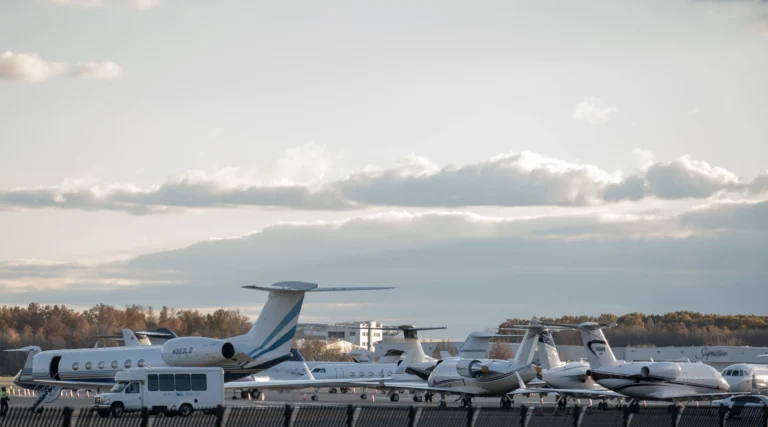
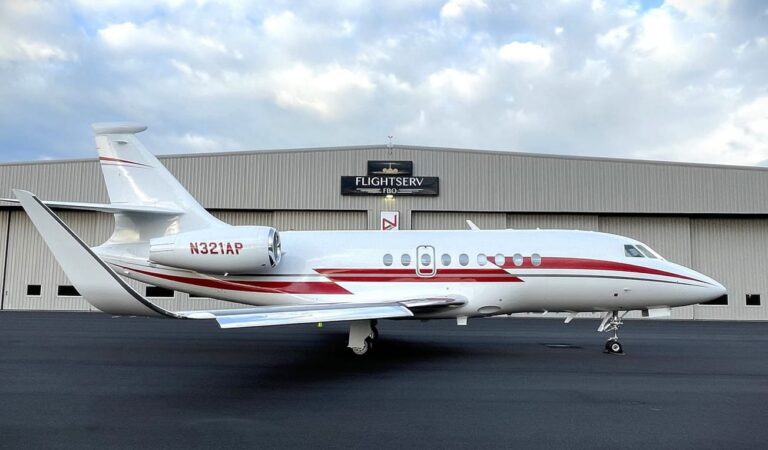
As the demand for secluded, high-altitude estates continues to outpace urban growth, the infrastructure supporting these regions has evolved. Private terminals, or Fixed Base Operators (FBOs), have become the true gateways to the wilderness, acting as the critical link between the sky and the rugged interior of the Rockies, the Sierras, and the Tetons. The objective for the sophisticated traveler is to bridge the gap between metropolitan efficiency and alpine isolation without sacrificing the safety margins or the luxury expected at sea level.
Understanding “luxury jet mountain escapes usa”
The concept of luxury jet mountain escapes usa is frequently reduced to a marketing cliché, yet its technical reality is far more rigorous. At its core, this phrase describes a logistical ecosystem where private aviation is used to circumvent the geographic barriers of the American mountain ranges. While commercial airlines are restricted to a handful of major hubs (like Denver or Salt Lake City), the private jet traveler targets regional runways that place them within minutes, rather than hours, of their final destination.
Multi-Perspective Explanation
From a pilot’s perspective, these escapes are defined by “mountain flying” protocols—managing downdrafts, wind shear, and shorter runways. From a traveler’s perspective, they are defined by “time compression”—the ability to depart a boardroom in Manhattan at noon and be on a trailhead in Idaho by late afternoon.
Oversimplification Risks
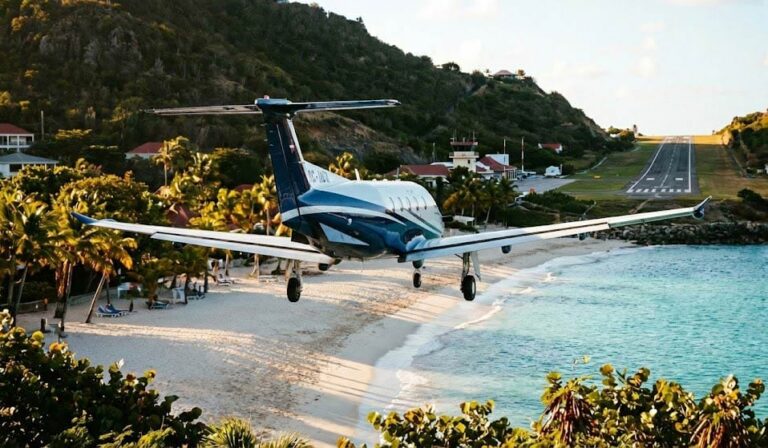
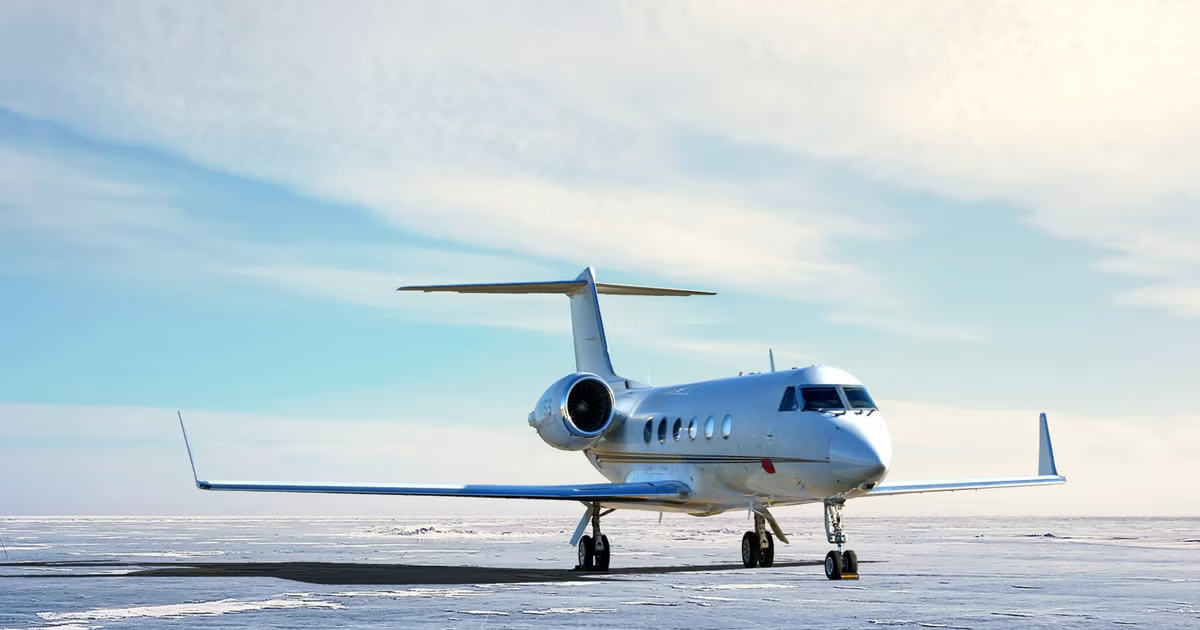
A primary risk in planning these trips is ignoring the “Performance Limit” of various aircraft. Many travelers assume any private jet can land at any mountain airport. This is a fallacy. High density altitude (caused by higher temperatures and elevations) significantly reduces an aircraft’s lift and engine performance. A jet that performs perfectly in Miami may require a much longer runway—or a significantly reduced passenger load—to safely take off from a high-altitude runway in mid-July.
Deep Contextual Background: The Evolution of Alpine Aviation
The history of mountain access in the U.S. began with the expansion of the railroad in the late 19th century, which established early hubs like Sun Valley and Glenwood Springs. However, the modern era of the “jet-set” mountain lifestyle was catalyzed by the post-WWII boom in general aviation and the subsequent development of the Learjet in the 1960s.
As wealthy individuals began seeking retreats further from the burgeoning crowds of mainstream resorts, the focus shifted toward “hidden” valleys. The development of the Aspen/Pitkin County Airport (ASE) as a hub for private aviation in the 1970s set the blueprint. It proved that a mountain town could sustain a luxury economy if it provided a reliable, albeit challenging, air link to the rest of the world.
Today, the systemic evolution is driven by the “de-urbanization” of wealth. High-altitude enclaves are no longer just winter destinations; they are primary or secondary residences. This has forced mountain airports to expand their hangar capacities and ground services to accommodate larger, long-range jets that can fly non-stop from Europe or Asia directly to the American West, bypassing coastal hubs entirely.
Conceptual Frameworks and Mental Models
Navigating the world of high-altitude luxury requires a set of frameworks to ensure both safety and satisfaction.
1. The Altitude-Performance Matrix
This model weighs the elevation of the destination airport against the temperature (density altitude) and the aircraft’s climb capabilities.
-
The Rule: As elevation increases, the “useful load” of the aircraft decreases.
-
Limit: There is a physical ceiling where certain light jets simply cannot operate safely during summer heatwaves, regardless of pilot skill.
2. The Last-Mile Logistical Gap
This framework identifies the friction that occurs between the aircraft and the estate. A flight may take three hours, but if the ground transit over a mountain pass takes another three, the “jet advantage” is halved.
-
Solution: Integrating helicopter transfers or specialized 4×4 concierge services to bridge the gap.
3. The Weather Window Strategy
Unlike metropolitan travel, mountain travel is dictated by “micro-climates.” This model uses a 72-hour rolling window to decide on departure times, acknowledging that a clear sky in the valley does not guarantee a clear approach through the peaks.
Key Categories and Variations
Not all luxury jet mountain escapes usa are identical. They vary based on the primary activity, the duration of the stay, and the specific mountain range.
| Category | Primary Benefit | Typical Region | Aircraft Requirement |
| The Weekend Sprint | High efficiency | Park City (SLC/PCM) | Light to Mid-size Jet |
| The Wilderness Deep-Dive | Maximum privacy | Salmon River, Idaho | Turboprop or STOL aircraft |
| The Seasonal Residence | Long-term comfort | Aspen/Snowmass (ASE) | Large Cabin (Global/Gulfstream) |
| The Adventure Hub | Multi-sport access | Jackson Hole (JAC) | Super Mid-size (Challenger) |
| The Eastern Retreat | Accessibility | Blue Ridge/Appalachians | Any (Lower Altitudes) |
Realistic Decision Logic
The choice between these categories often comes down to the trade-off between “Town Access” and “Trail Access.” Those seeking the social infrastructure of high-end dining and galleries will gravitate toward Aspen or Park City, where the airports are robust. Those seeking true isolation must often trade the comfort of a heavy jet for the “Short Takeoff and Landing” (STOL) capabilities of a turboprop to reach smaller, more rugged airstrips.
Detailed Real-World Scenarios Luxury Jet Mountain Escapes USA
Scenario 1: The Summer Heat Wave Peak
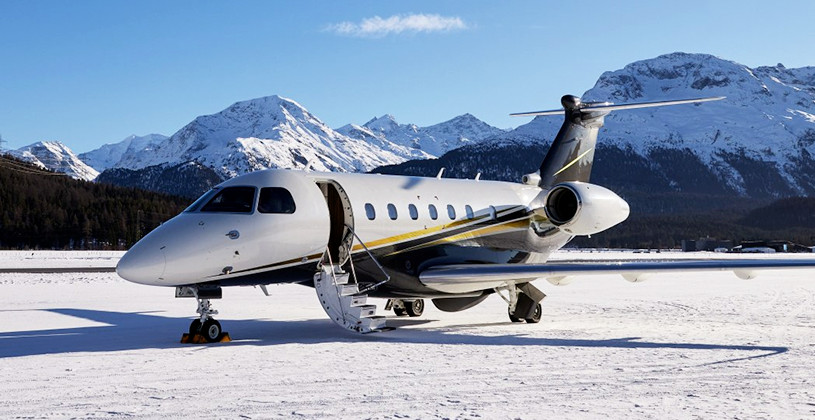
A group of eight wishes to fly from Dallas to Telluride (TEX) in July.
-
Constraint: Telluride is one of the highest commercial airports in the U.S. (9,078 feet). In high heat, air density drops.
-
Decision Point: A standard mid-size jet may not be able to take off with a full fuel load and eight passengers.
-
Outcome: The group must either split into two smaller aircraft or fly into Montrose (MTJ) and take a 90-minute ground transfer. Choosing the latter preserves the group’s ability to fly in a single large cabin.
Scenario 2: The Winter Storm Diversion
A family is flying into Jackson Hole (JAC) during a major blizzard.
-
Failure Mode: The airport closes due to visibility.
-
Second-Order Effect: The primary diversion airport (Idaho Falls) is also overwhelmed.
-
Resolution: The charter operator pre-arranges “standby ground transport” in Salt Lake City as a contingency, illustrating that the “best” escape is one with a redundant logistical plan.
Planning, Cost, and Resource Dynamics
The financial commitment for these escapes extends far beyond the hourly rate of the jet. High-altitude operations incur “mountain premiums.”
Cost Range Table (USD)
| Expense Item | Low-End (Light/Regional) | High-End (Ultra-Long Range) |
| Flight Hour Rate | $3,500 – $5,500 | $12,000 – $22,000 |
| Mountain Landing Fees | $250 | $1,500+ (Peak Season) |
| Hangarage (Heated) | $150 / night | $1,000+ / night |
| De-Icing Services | $500 (Small) | $5,000+ (Large) |
| Concierge/Ground Support | $500 / day | $5,000+ / day |
Opportunity Cost
The “indirect cost” of choosing a mountain destination is the potential for being “snowed in.” For a high-stakes executive, a 48-hour weather delay isn’t just a travel inconvenience; it’s a significant business risk. This necessitates the use of operators with large fleets who can swap aircraft or routes on short notice.
Tools, Strategies, and Support Systems
To manage the complexity of luxury jet mountain escapes usa, several critical support systems are utilized:
-
FBO Concierge Teams: These are the ground-based “fixers” who manage everything from heated hangars to specialized catering that survives the pressure changes of altitude.
-
Advanced Weather Modeling: Moving beyond standard apps to professional meteorology services that predict “mountain waves” and icing conditions.
-
Mountain-Qualified Crews: Pilots who undergo specific simulator training for high-altitude, one-way-in/one-way-out runways.
-
Helicopter Shuttles: Used as a “bypass” for mountain pass traffic, especially during peak holidays like Christmas or Sundance.
-
Climate-Controlled Storage: Essential for transporting sensitive equipment (skis, high-end photography gear) or wine collections to high-altitude estates.
-
Oxygen Management: On-board systems and ground-level “oxygen bars” or in-home systems to mitigate altitude sickness for travelers arriving from sea level.
Risk Landscape and Failure Modes
The primary risks in this sector are “compounding.” A minor mechanical issue in a metropolitan hub is a nuisance; a minor mechanical issue at a remote mountain airstrip is a multi-day grounding.
-
Taxonomy of Risk: * Atmospheric: Icing, microbursts, and fog.
-
Technical: Brake overheating on short, steep runways.
-
Human: Pilot fatigue and “get-there-itis”—the urge to land despite deteriorating conditions.
-
-
Compounding Effects: A weather delay leads to a missed de-icing slot, which leads to a crew-duty-time expiration, resulting in a 24-hour grounding in a location with limited hotel availability.
Governance, Maintenance, and Long-Term Adaptation
For owners of mountain properties or frequent flyers, “governance” of their travel involves regular audits of their providers.
Monitoring and Review Cycles
-
Annual Safety Audit: Reviewing the ARGUS or Wyvern ratings of charter operators specifically for mountain performance.
-
Seasonal Debriefs: Analyzing the “missed approach” rate or diversion frequency of a chosen route.
-
Adjustment Triggers: If a traveler consistently experiences altitude sickness, the “adaptation” may be a shift in destination from 9,000 feet (Telluride) to 6,000 feet (Sun Valley).
Measurement, Tracking, and Evaluation
How is the “quality” of a luxury mountain escape measured?
-
Leading Indicators: Pilot experience hours in mountainous terrain; aircraft age and avionics suite (e.g., Synthetic Vision Systems).
-
Lagging Indicators: Total “door-to-door” travel time versus commercial alternatives; percentage of flights diverted.
-
Qualitative Signals: The “frictionless” nature of the transition from the aircraft cabin to the mountain residence.
Documentation Examples
-
The Flight Log: Recording tail-wind components and density altitude for future performance planning.
-
The Ground Manifest: Tracking the reliability of local car services during heavy snowfall.
Common Misconceptions and Oversimplifications
-
Myth 1: “All mountain airports are the same.” Correction: Flying into Reno (RNO) is a standard big-airport experience; flying into Aspen (ASE) is a precision maneuver requiring specialized training.
-
Myth 2: “Private jets can fly in any weather.” Correction: Small mountain airports often lack the sophisticated Instrument Landing Systems (ILS) of major hubs, meaning they require better visibility to land safely.
-
Myth 3: “Summer is the ‘easy’ season for mountain flying.” Correction: Summer brings the danger of “Density Altitude” and unpredictable afternoon thunderstorms, which can be more dangerous than winter snow.
Conclusion
The pursuit of luxury jet mountain escapes usa is a testament to the human desire to combine extreme comfort with extreme wilderness. It is a domain where the margin for error is thin, but the rewards—in terms of privacy, beauty, and time—are unparalleled. Success in this arena is not found in the most expensive jet or the most famous resort, but in the meticulous coordination of aviation science and ground-level logistics. As technology improves, the “mountains” will feel closer, but they will always demand the same level of respect and planning from those who choose to visit them by air.