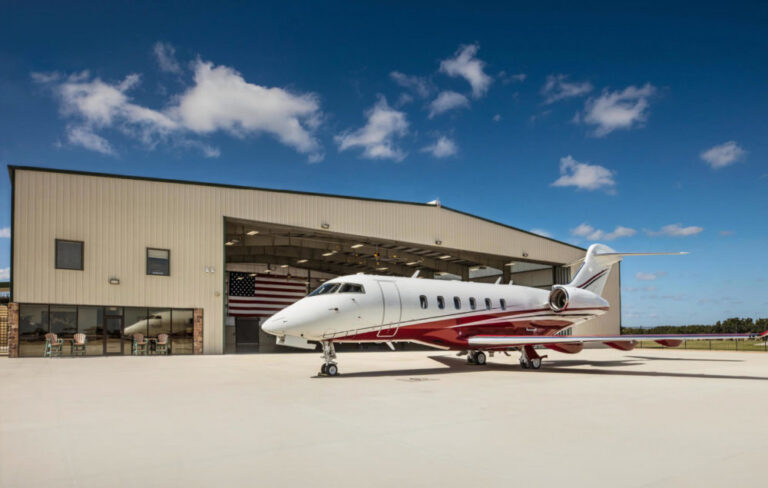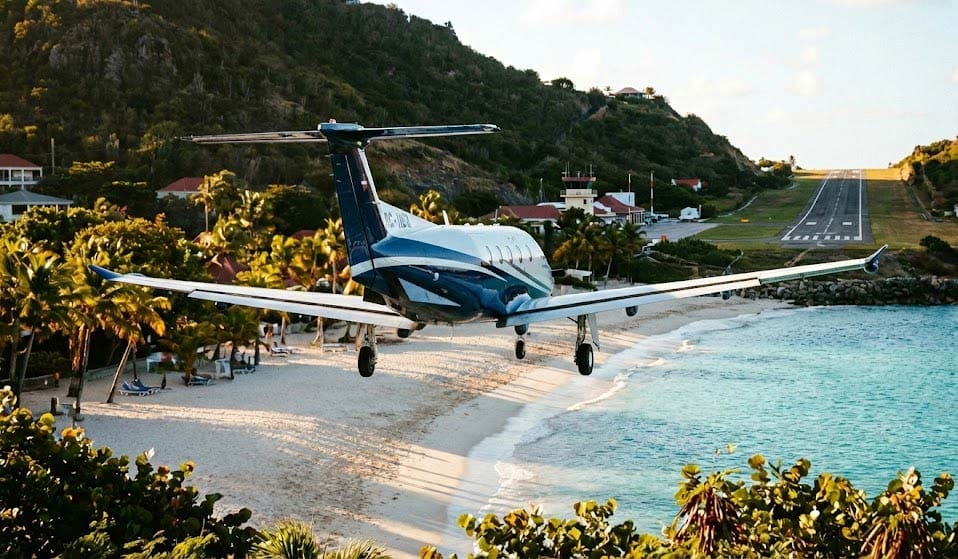
Best Coastal Jet Retreats USA: The 2026 Definitive Pillar Guide
The American coastline represents a complex topographical and logistical challenge for private aviation. While the concept of a “seaside getaway” is often reduced to a visual of white sand and turquoise water, the reality for those operating high-performance turbine aircraft involves a sophisticated calculus of marine weather patterns, salt-air corrosion mitigation, and the acute limitations of regional island airstrips. Best Coastal Jet Retreats USA. In 2026, the definition of a premier coastal escape has evolved; it is no longer merely about the destination’s amenities, but the seamlessness with which an aircraft can transition from the stratosphere to a corrosive, high-humidity environment without compromising operational integrity.
The logistical friction of coastal travel is frequently underestimated. Unlike inland hubs, coastal airports are subject to “marine layers”—low-lying fog banks that can drop visibility to near-zero in minutes—and strict noise abatement procedures designed to protect fragile ecosystems and high-value residential corridors. For the principal, the true luxury of these retreats lies in “time sovereignty”: the ability to land at a private field minutes from a wharf or estate, bypassing the congested metropolitan hubs that define the Atlantic and Pacific seaboards.
This editorial analysis serves as a definitive pillar for those navigating the most exclusive maritime corridors of the United States. We will move beyond the superficiality of travel brochures to examine the systemic realities of “Jet-to-Water” travel: the engineering requirements for short-field coastal landings, the economic impact of seasonal “slot” scarcity in places like Nantucket or Newport, and the emerging environmental governance of the blue economy. To master this segment of travel is to understand that the most desirable locations are often the most difficult to access, requiring a fusion of pilot skill, airframe performance, and forensic planning.
Best Coastal Jet Retreats USA
To accurately evaluate the best coastal jet retreats usa, one must first dismantle the oversimplification that a beach and a runway are sufficient for a luxury experience. From a multi-perspective explanation, a “top” retreat is defined by its “Infrastructure-to-Exclusivity Ratio.” For the flight department, a retreat is only as good as its nearest Fixed Base Operator (FBO); for the passenger, it is defined by the proximity of the tarmac to the shoreline.
A common misunderstanding in this sector is the belief that “Island Time” applies to aviation logistics. On the contrary, coastal aviation requires higher precision than transcontinental flying. Coastal airports often have “one-way-in, one-way-out” approaches due to terrain or noise restrictions. If a sea breeze shifts the tailwind component beyond the aircraft’s certification limits, a jet may be forced to divert to an inland hub, transforming a 20-minute transfer into a three-hour ground ordeal.
Furthermore, the “Retreat” aspect must be viewed through the lens of “Asset Preservation.” Coastal air is saturated with sodium chloride, which is highly hygroscopic. A jet parked on a coastal ramp for a week without proper engine covers or “wash-down” protocols is undergoing accelerated galvanic corrosion. Therefore, the “best” retreats are those that offer climate-controlled hangarage or specialized FBO services that understand the unique demands of the maritime atmosphere.
Deep Contextual Background: The Evolution of Maritime Aviation
Historically, coastal retreats were the domain of the seaplane. In the 1930s and 40s, the “Pan Am Clippers” and private flying boats allowed the elite to land directly in the harbors of the Hamptons or the Florida Keys. However, as jet technology advanced, the need for stabilized runways moved the centers of gravity inland. The 1960s and 70s saw the development of regional coastal airports like Hilton Head (HXD) and Martha’s Vineyard (MVY), which were specifically expanded to accommodate the first generation of corporate jets.
In the 1990s, the “Fractional Revolution” increased the volume of traffic to these sensitive areas tenfold. This led to a “Governance Crisis” in coastal communities. Airports that once welcomed private traffic began instituting “curfews” and “voluntary noise programs” to mitigate the impact of low-flying jets on coastal residents and wildlife.
By 2026, the evolution has moved toward “Stealth and Sustainability.” The most desirable coastal retreats are now those that can accommodate ultra-long-range jets while maintaining a low acoustic footprint. We are seeing a surge in “Reliever Coastal Hubs”—smaller, less congested airports that offer high-speed ferry or helicopter transfers to the final island destination, preserving the “Retreat” feel by keeping the heavy machinery at a distance.
Conceptual Frameworks for Coastal Logistics
1. The Marine Layer Equilibrium
This framework is used to predict “Go/No-Go” windows. Coastal weather is cyclical; the marine layer typically burns off by 11:00 AM and returns by 5:00 PM. A mistake often made by travelers is scheduling an “Early Morning” arrival or a “Sunset” departure. The framework advocates for “Mid-Day Peak” windows to ensure the highest probability of a visual approach.
2. The Salinity-Exposure Matrix
This mental model categorizes the risk to the airframe based on the “Distance from the Surf.” An aircraft parked 100 yards from the ocean (e.g., at certain Caribbean or Florida strips) is in a “High-Attack Zone.” An aircraft parked five miles inland at a sheltered field is in a “Low-Attack Zone.” The framework forces owners to weigh the convenience of a beach-side landing against the long-term maintenance cost of corrosion.
3. The “Slot-Scarcity” Framework
Coastal travel is hyper-seasonal. During peak windows (e.g., July in New England or March in the Florida Keys), the “Resource” is not the jet, but the “Landing Slot.” This model treats a landing slot as a perishable commodity that must be secured months in advance, similar to a high-end restaurant reservation.
Key Categories: From Barrier Islands to Pacific Bluffs
Realistic Decision Logic
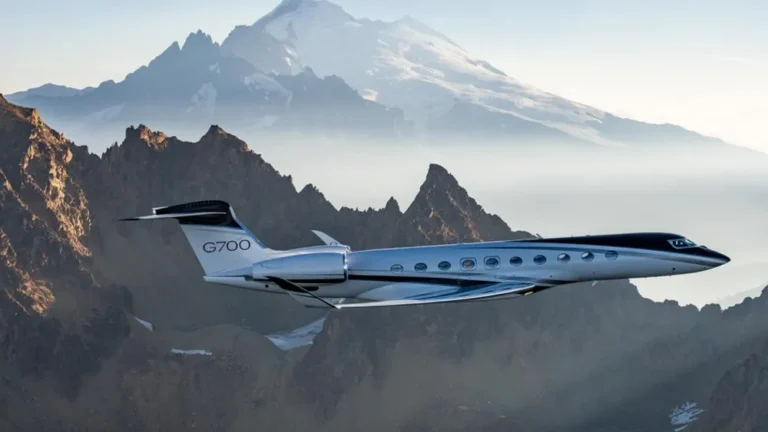
The choice of a coastal retreat is often governed by “Runway Length vs. Cabin Size.” A principal flying a Gulfstream G700 is restricted to “Primary Coastal Hubs” with 6,000+ feet of tarmac. For those willing to utilize a “Super-Midsize” jet like the Challenger 3500, the aperture of available retreats opens significantly, allowing for landings on shorter, more remote island strips.
Detailed Real-World Scenarios and Operational Failure Modes Best Coastal Jet Retreats USA
Scenario 1: The “Nantucket Gridlock”
A family attempts to depart Nantucket (ACK) on a Sunday afternoon in August.
-
The Constraint: The airport is operating at 110% capacity; ATC is issuing 2-hour “Ground Delay Programs.”
-
The Failure: The crew didn’t secure an IFR (Instrument Flight Rules) slot in advance.
-
Outcome: The jet sits on the ramp for three hours with the APU (Auxiliary Power Unit) running, burning $2,000 in fuel and frustrating the passengers.
-
Mitigation: Move the departure to Monday morning or utilize the “Reliever” strategy at Hyannis (HYA).
Scenario 2: The “Ocean Reef Crosswind”
A light jet attempts to land at Ocean Reef (07FA) in North Key Largo.
-
The Constraint: The runway is narrow and surrounded by mangroves; crosswinds are gusting at 25 knots.
-
The Decision Point: The pilot must choose between a high-risk landing or a 60-mile divert to Miami.
-
Failure Mode: Attempting the landing with a “heavy” aircraft, leading to a runway excursion into the foliage.
-
Second-Order Effect: The aircraft is grounded for months; the “private” nature of the club means the incident is highly visible to other members.
Planning, Cost, and Resource Dynamics
The “Total Cost of Maritime Access” is significantly higher than inland travel due to “Environmental Surcharges” and “Positioning Fees.”
Estimated Premium Costs for Coastal Operations (Peak Season)
Direct and Indirect Costs: A major “indirect” cost is the “Corrosion Depreciation.” An aircraft that spends 30% of its time at coastal retreats will show “pitting” and “exfoliation” in its maintenance logs, which can reduce its resale value by 10-15% compared to a “Desert-Based” aircraft.
Tools, Strategies, and Support Systems
To ensure a seamless experience at the best coastal jet retreats usa, the following pillars are essential:
-
Marine-Specific Weather Tools: Utilizing apps like “Windy” or “PredictWind” alongside traditional aviation weather (METARs) to understand “Sea Breeze Fronts.”
-
Corrosion Inhibition Compounds (CIC): Ensuring the maintenance team applies “Avion Guard” or “ACF-50” to the airframe before the coastal season begins.
-
Helicopter/Vtol Integration: Using Blade or similar services to jump the “last mile” from a mainland jet hub to a coastal estate.
-
Digital Slot Management: Software that integrates directly with the FAA’s “e-STMP” (Special Traffic Management Programs) for peak event windows.
-
Mobile “AOG” (Aircraft on Ground) Teams: Identifying the nearest maintenance hub in case of a bird strike—a high-probability event in coastal avian corridors.
-
Custom “Island-Prep” Kits: Keeping specialized engine covers, pitot tube covers, and “desiccant bags” on the aircraft at all times.
-
FBO Concierge Partnerships: Pre-arranging “Water Taxis” that meet the aircraft at the FBO gate.
-
Synthetic Vision Systems (SVS): Vital for “Fog-Prone” coastal approaches like Monterey or Maine.
Risk Landscape: Weather, Salinity, and Scarcity
Coastal aviation is a “Compound Risk” environment.
-
The “Bird Strike” Hazard: Coastal airports are often located near wetlands or estuaries. A high concentration of gulls or migratory birds represents a constant threat during the “Takeoff and Landing” phases.
-
The “Salt-Fog” Compound: When fog rolls in, it carries microscopic salt particles deep into the aircraft’s air intakes and electronics. This isn’t just a surface issue; it is an “internal” reliability issue.
-
The “Logistical Cul-de-Sac”: On an island, you are at the mercy of the “Inbound Flight.” If the morning ferry flight breaks down on the mainland, there are no “backups.” You are stranded until a replacement is ferried in.
Governance, Maintenance, and Long-Term Adaptation
For a flight department, “Coastal Competency” is a long-term adaptation.
-
Audit Cycles: Every 12 months, the airframe should undergo a “Deep-Cleaning and Corrosion Audit” by a specialized facility.
-
Environmental Review: Coastal airports are the “front lines” of climate change. Rising sea levels are already forcing certain island strips (like those in the Outer Banks) to undergo frequent “Runway Re-Surfacing.”
-
Layered Checklist for Coastal Missions:
-
[ ] Confirm “Hangar Space” at least 14 days in advance.
-
[ ] Verify the aircraft’s “Short-Field” performance for the current temperature/humidity.
-
[ ] Schedule a “Post-Retreat Wash” at an inland FBO.
-
[ ] Check the “Tide Charts” if using a water-front FBO transfer.
-
Measurement and Evaluation of Operational Success
Success in this arena is measured by “Reliability in Chaos.”
1. Leading Indicators
-
Slot Success Rate: Percentage of times the preferred landing time was secured without ATC-imposed delays.
-
Approach Accuracy: Number of “Missed Approaches” due to coastal fog.
2. Lagging Indicators
-
Maintenance Cost Delta: Tracking the increase in “Brake” and “Landing Gear” maintenance due to salt-air exposure.
-
The “Time-to-Beach” Metric: The actual elapsed time from “Chocks Set” to “First Ocean Interaction.”
Common Misconceptions and Industry Myths
-
“The beach is the best place to park.” It is the worst. Park as far from the water as the FBO allows.
-
“Coastal fog always burns off by noon.” In “June Gloom” in California or “Foggy July” in Maine, it can stay socked in for 48 hours.
-
“Private jets can land on sand.” Unless it is a specifically modified bush plane (unlikely for a retreat jet), sand ingestion will destroy a jet engine in seconds.
-
“Noise curfews are just suggestions.” Fines for breaking curfews at airports like Santa Monica (SMO) or Naples (APF) can exceed $10,000 and lead to a permanent ban.
-
“All FBOs have the same fuel.” Island fuel is often 20-30% more expensive and can occasionally run low during “Hurricane Season” disruptions.
-
“The view is the only reason to fly coastal.” The accessibility is the reason. The view is a secondary benefit.
Conclusion
The pursuit of the best coastal jet retreats usa is an exercise in “Environmental Management.” It is a sector where the “Serene” and the “Violent” coexist. To be a successful traveler in this space is to recognize that the ocean is a beautiful but hostile environment for an aircraft.
By utilizing “Reliever” strategies, aggressive “Corrosion Mitigation,” and respect for “Marine Layer” cycles, the principal can ensure that their retreat remains a sanctuary, rather than a logistical nightmare. In the 2026 landscape, the ultimate coastal luxury is the confidence that your jet is as well-protected as your seaside estate.